
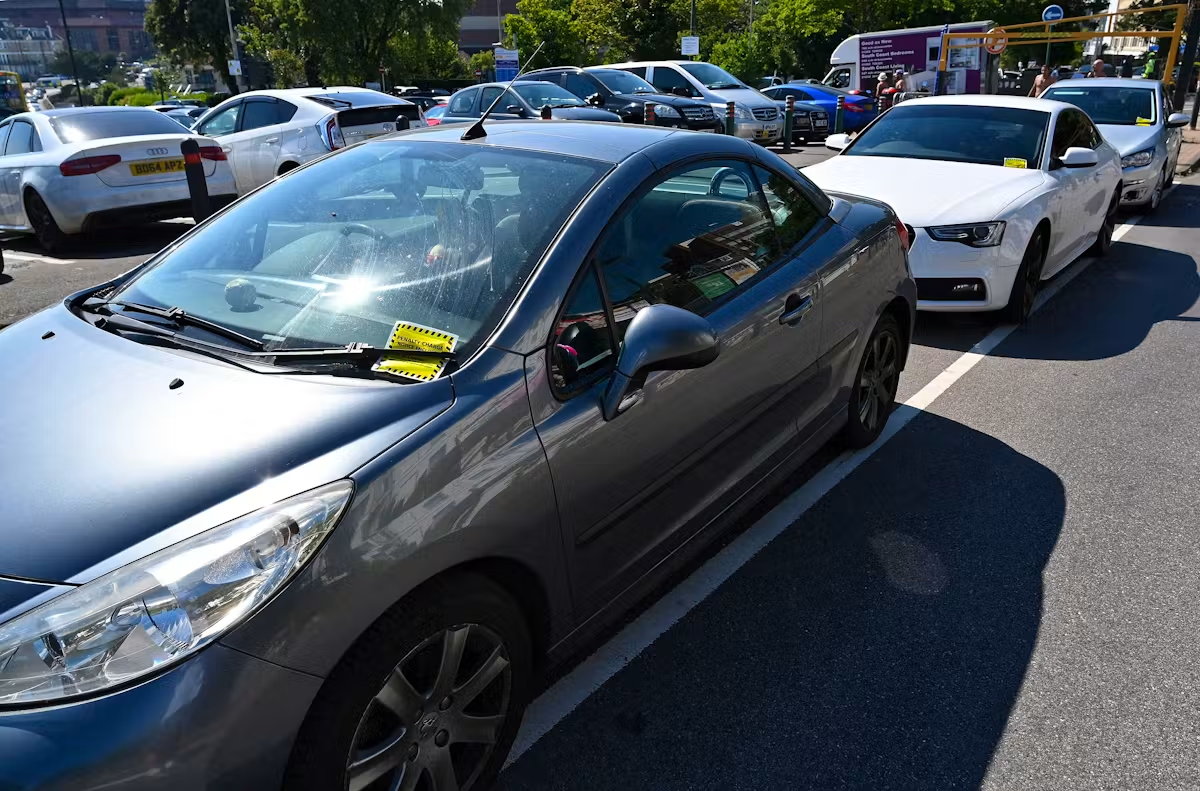
During heatwaves, it is imperative to take precautions on the road to travel safely. Even when your car is parked, caution is essential. Recent tragedies have reminded us of the importance of never leaving a person or animal alone inside a parked vehicle.
It is also recommended to remove certain objects from the passenger compartment. As the Auto Club Europe (ACE) points out, a car exposed to the sun quickly turns into a real furnace. The interior temperature can reach 60°C in a very short time and rise to 80°C after an hour of exposure. At this temperature, mundane everyday objects can become particularly dangerous.
Deodorants, hairsprays and other aerosol sprays
Hairsprays, deodorants, insect repellent sprays or sunscreen sprays and most aerosol cans are designed to withstand temperatures of up to 50°C. In extreme heat, internal pressure increases and containers may burst or even worse, explode. Therefore, they should not be left inside a vehicle, even for short periods. Generally speaking, aerosol cans should never be exposed to direct sunlight.
Lighters
It is also recommended to take lighters out of the car. They contain flammable gas or liquid. In high heat, they can leak, burst or catch fire. Like aerosol cans, conventional lighters are designed to withstand temperatures of up to around 50°C, according to “Chip.de”. Even if the lighter appears intact, it may be defective. “A damaged valve increases the gas leak rate and makes the lighter uncontrollable. This may cause a sudden flame during the next use,” the site specifies.
Smartphones, tablets, laptops
Electronic devices, especially those containing lithium-ion batteries (smartphones, laptops, tablets), should also not be left inside a parked vehicle in high heat. Batteries cannot withstand extreme heat or direct exposure to sunlight. Both can cause what’s called thermal runaway, with the battery overheating. Flammable gases are formed and additional oxygen is released. This generates even more heat. Consequence: the battery swells, burns or explodes.
Antifreeze, disinfectant or cleaning products
Also be careful with chemicals: antifreeze, disinfectants or cleaning products should not be left exposed to heat either. Many of these products contain alcohol, solvents and are easily flammable. Depending on the packaging, toxic gases may also escape.
Food
A danger of a completely different nature comes from food transported in cars when it is hot. In fact, heat promotes the rapid proliferation of germs both inside and on the surface of products. The latter deteriorate much more quickly. This can lead to infections or food poisoning, warns chemist and science journalist Mai Thi Nguyen-Kim. The risk of germ proliferation is so high in summer that experts even recommend using insulated bags when transporting groceries home. And this, from an outside temperature of 8°C.
Plastic or glass bottles
Bringing drinks makes sense, especially on long car journeys. However, bottles, whether plastic or glass, should not be left exposed for hours to sunlight or heat, among other things to prevent drinks from heating up.
-
Microbial contamination: In an already opened plastic bottle, bacteria multiply quickly at high temperatures.
-
Release of chemicals: Plastic can release chemicals such as phthalates or microplastics (especially in disposable bottles), which end up in water.
-
Fire risk: transparent water bottles act like a magnifying glass in the sun. They can concentrate sunlight to the point of significantly heating the car seats or dashboard and, in the worst case, causing a fire.
Glasses, sunglasses and plastic items
Glasses should also not be left in a parked car. Heat can warp plastic, soften glues and damage frames. Glasses lenses can even be dangerous. Like transparent water bottles, they can cause a magnifying effect and therefore a fire risk.
Drugs
Many medicines need to be stored cool, dry and protected from light, as high temperatures could affect their effectiveness, sometimes dangerously.
