
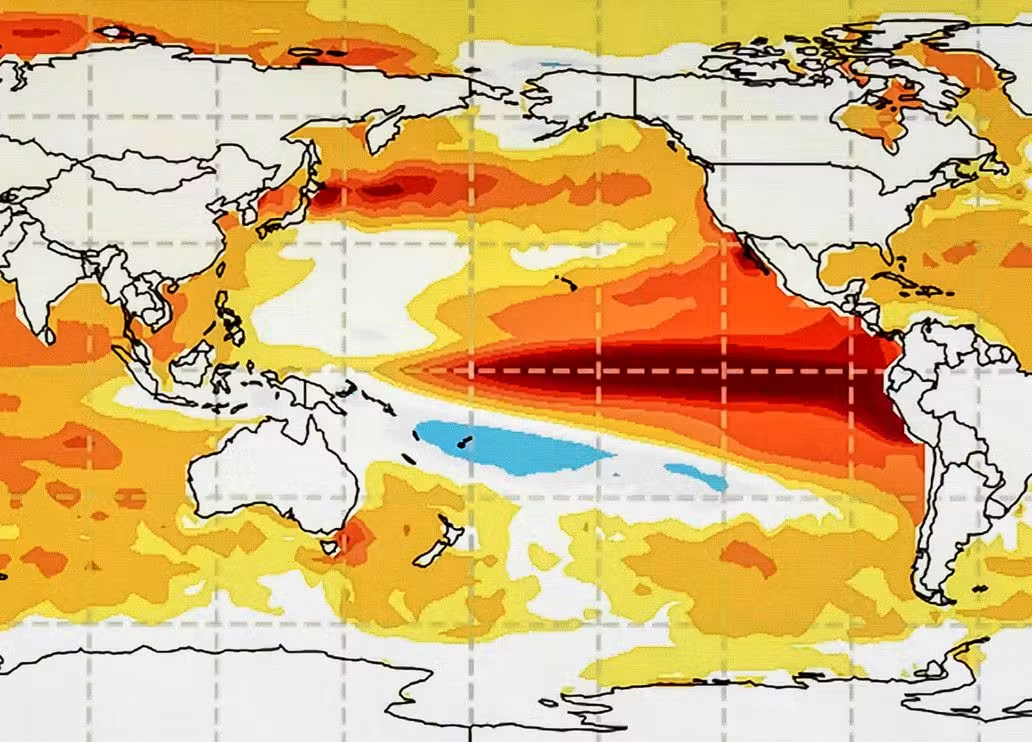
The United Nations warned on Tuesday of the many potential repercussions of El Niño on health, stressing that this natural climatic phenomenon represents a “significant threat”.
There are multiple health risks, according to the World Health Organization (WHO): extreme heat likely to aggravate certain illnesses, poor air quality linked in particular to fires, but also malnutrition and cholera favored by droughts and floods.
By promoting exceptional rainy episodes and flooding, El Niño can also increase the spread of diseases transmitted by mosquitoes, such as malaria, dengue or chikungunya.
“The health consequences of the El Niño phenomenon are predictable. We have a window of opportunity to act now, before these risks become a crisis,” said Teresa Zakaria, head of unit for risk reduction, humanitarian operations and climate change at WHO, during a press briefing in Geneva.
“Save lives”
“We therefore call on governments, partners and communities to invest without delay, to prepare and to take early action in order to save lives and preserve health services,” she added.
The WHO calls on countries to better prepare their health systems, strengthen disease surveillance, ensure continuity of care and provide stocks of medical equipment in the areas most at risk.
The current El Niño episode, which could become the strongest on record, has already caused extreme weather conditions around the world.
“El Niño poses a significant threat to public health,” warned Ms. Zakaria.
The current episode of El Niño could be “the most powerful” observed since measurements of the climate phenomenon began four decades ago, the UN World Meteorological Organization (WMO) warned in early September, which is due to publish its next bulletin on the phenomenon at the end of November.
Its effects are already being felt and are expected to become more pronounced, with consequences that will continue beyond the peak expected at the end of the year, Armel Castellan, advisor to the WMO-WHO Joint Office, explained to journalists.
This phenomenon adds to the consequences of climate change caused by human activities, notably boosting extreme weather events.
“Its impact coincides with already very high reference temperatures across the globe. So it’s sort of a double whammy,” said Mr. Castellan.
