
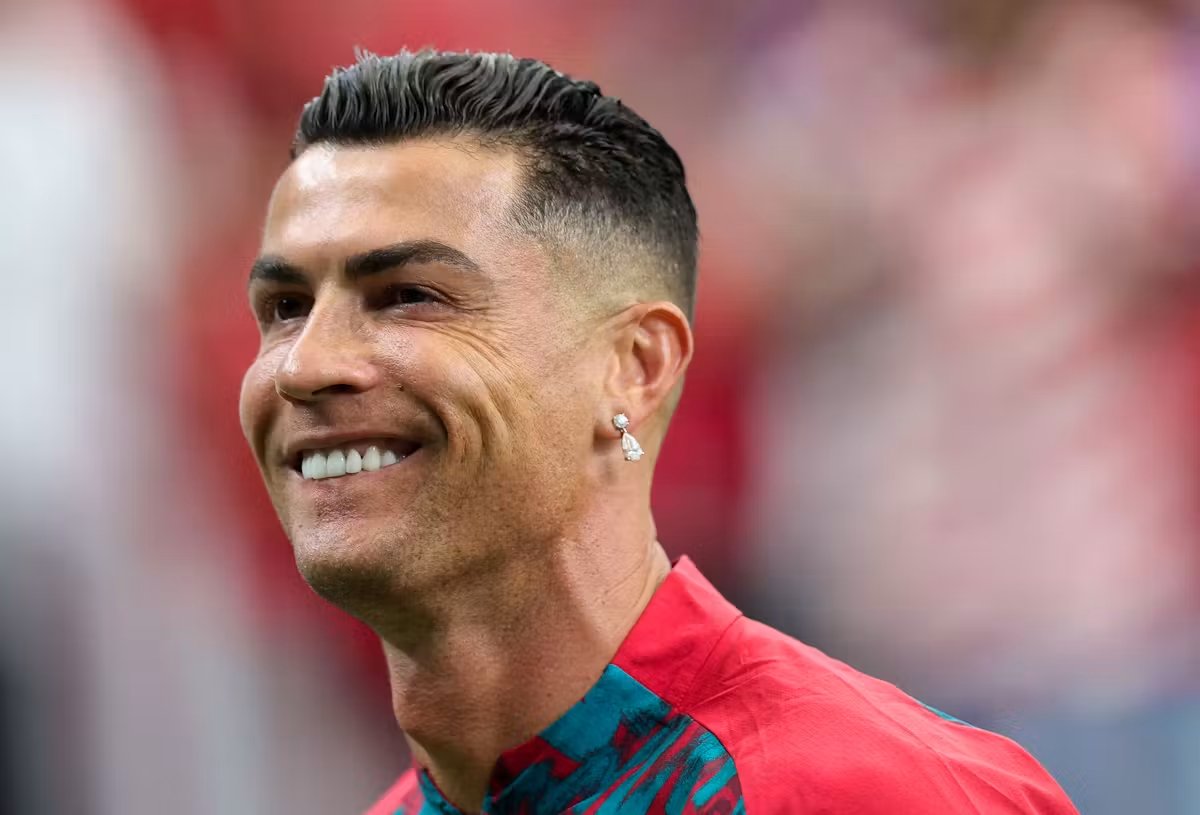
Supporterism, even fanaticism in some cases, has always existed in football. Every fan has their favorite team, the one they support through thick and thin. The opposite has always existed too. Supporting your club also means hating your rival. Nothing abnormal in the end.
Except that in recent years the way of following football has changed. Whether because of the eternal debate between Cristiano Ronaldo and Lionel Messi or because of the “tiktokization” of sport, which places stars above everything else, fans now idolize individuals. It doesn’t matter which club or selection they represent.
It is even the scourge of current football. Because the fans, mainly from this very young generation fed on social networks, adopt unhealthy behaviors. This 2026 World Cup is a sad demonstration of this.
Joao Neves harassed by pros-CR7
Just look at the cyberharassment suffered by Joao Neves and his partner, who was forced to deactivate comments under his publications. The Portuguese is a player that everyone appreciates, who is one of the pillars of his selection, one of the best midfielders in the world and also the only scorer for the Seleçao against the DR Congo (1-1).
So what can he possibly be accused of? For saying that Cristiano Ronaldo was a player like any other: someone who is there to help Portugal achieve its goals.
A very normal statement in a team sport which has absolutely not gone down with those who worship the personality that is Cristiano Ronaldo.
This example is the most caricatured because even Georginia Rodriguez, CR7’s wife, got involved. But you just have to scroll through social networks to see that fans of Lionel Messi, Lamine Yamal or Kylian Mbappé demonstrate the same toxicity.
Football has a problem with this excessive fanaticism. And nothing will change until those primarily concerned speak up to put the team at the center of everything.
Your opinion deserves more than a comment? Submit an article!
Your voice deserves to be heard. Expand your views here.
