
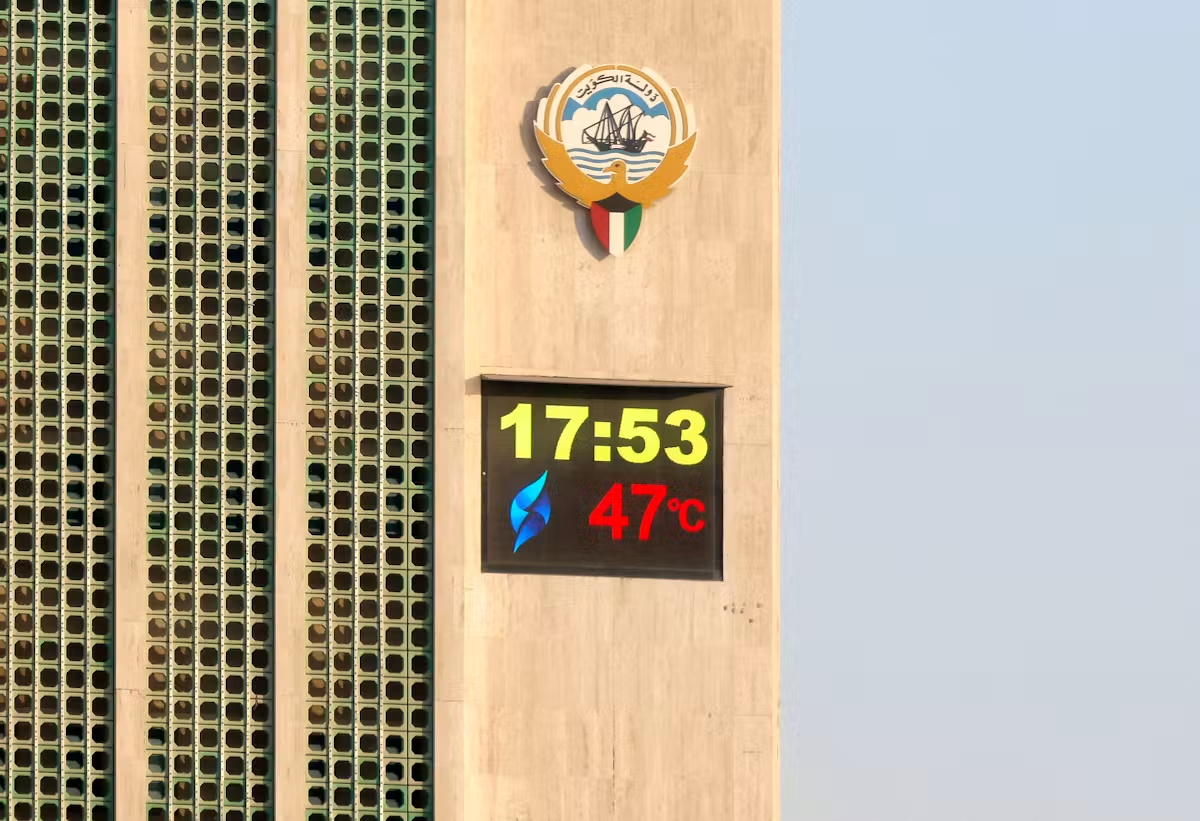
Switzerland is already experiencing its fourth heat wave of the season, even though the month of August has only just begun. The increase in heatwaves, due to global warming on our planet, is forcing us to get used to living in extreme temperatures.
In other countries, it has been commonplace for hundreds of years for the thermometer to exceed 35°, forcing local populations to adapt. From traditional electrolyte drinks to refreshing Japanese gadgets, what heat-fighting tips from around the world could also inspire the Swiss?
Electrolytes, stars of Indian drinks
Heat waves in India are considered particularly extreme. In the north and center of the country, temperatures regularly reach between 46 and 49°C. In cities, concrete surfaces, heavy traffic and a lack of green spaces further increase the heat.
It is therefore not surprising that, over the generations, residents have developed their own tricks to better cope with this intense heat. Among them are traditional drinks like Aam Panna or Sattu Sharbat. These are often prepared with black salt, which helps offset some of the electrolyte losses from heavy sweating.
In Senegal, the boubou is required
Loose clothing is part of everyday life in many parts of West Africa. In Senegal, for example, the traditional boubou protects from direct sunlight, while its wide cut promotes air circulation.
Because even when it’s very hot, wearing less clothing or short clothing is not necessarily the best solution. Long, flowing clothes made of cotton, linen or silk protect the skin from the sun and, thanks to their loose fit, are often more comfortable to wear than tight tank tops or denim shorts.
Japanese gadgets are being snapped up in stores
Japan, like much of Asia, suffers from intense heat combined with air humidity levels between 70 and 100%. Consequence: the body’s perspiration does not evaporate and the feeling of heat skyrockets.
To cope with the heat, the Japanese are relying on technological solutions. In addition to portable fans, more and more people are using neck cooling rings. Others opt for cooling clothing made from organic substances that cause a feeling of cold upon contact with water or sweat.
Iran, master of the wind
For centuries, people in Iran have used “badguir,” or wind towers, to naturally cool their buildings. These towers, which rise above roofs, capture the wind and direct it inside homes, where it creates air circulation and provides a cooling effect, without consuming electricity.
Particularly present in desert cities like Yazd, wind towers are still part of the urban landscape today. Faced with the multiplication of heat waves, they are even increasingly considered as a model of sustainable architecture adapted to the climate.
To Emirates, Air-conditioned Dubai
Dubai is one of the hottest cities in the world. In summer, temperatures can reach 45°C on the hottest days. Even at night, the thermometer rarely drops below 30°C.
To make daily life more bearable, the city has been relying on fully air-conditioned systems for years. In 2006, Dubai inaugurated the world’s first air-conditioned bus stops. Today, the emirate has nearly 900, to allow the transport network and public life to continue to operate, even in the heart of summer.
