
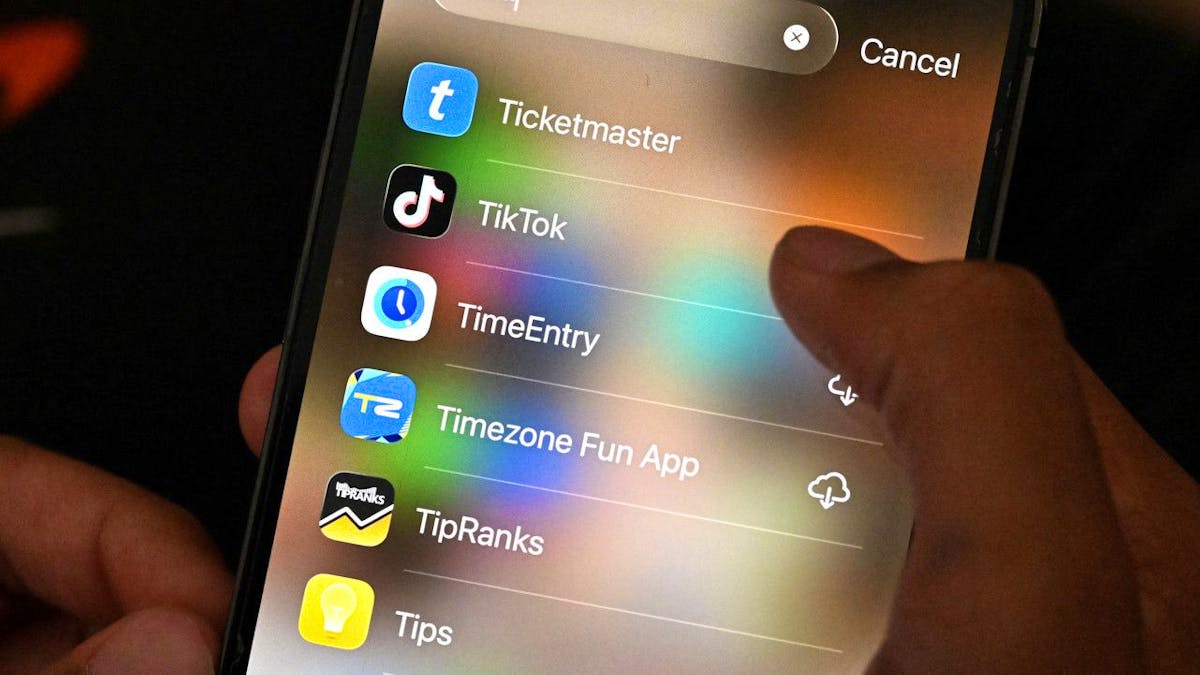
Under-16s in Australia have been officially banned from accessing many social networks since Wednesday morning, a pioneering move at a global level which aims to protect young people from the addictive algorithms of Instagram, TikTok and Snapchat.
Hundreds of thousands of teenagers are preparing to wake up disconnected from the applications on which they could spend several hours a day.
Without “reasonable” measures taken to enforce the law, the platforms concerned risk fines of up to 28 million euros under this obligation which came into force on Wednesday at midnight Sydney and Canberra time (2 p.m. this Tuesday in Switzerland), and the application of which will be scrutinized by the authorities of many countries.
Australia thus becomes one of the first countries to impose the most radical measures in the world against tech giants, including the Americans Meta and Google.
Social networks “are used as a weapon by harassers (…), are a vector of anxiety, constitute a tool for scammers and, worst of all, are a tool for online predators”, justified Labor Prime Minister Anthony Albanese, on the eve of the entry into force of the measure.
Addiction to screens, online harassment, violence, sexual content: the measure is welcomed with relief by many poor parents but only moderately enthuses those concerned.
“I don’t think the government really knows what it’s doing and I don’t think it will have an impact on Australian children,” says Layton Lewis, a 15-year-old Australian, interviewed before his official exclusion from the platforms.
“Responsibilities”
Facebook, Instagram, YouTube, TikTok, Snapchat and Reddit are now prohibited from maintaining or allowing the creation of accounts for users in Australia under the age of 16. The streaming platforms Kick and Twitch, as well as the social networks Threads and X, are also affected.
For the moment, the online gaming platform Roblox, the Pinterest network and even WhatsApp messaging are spared by the device. But this list may evolve, warned the government.
Some sites remain accessible without an account, like YouTube.
Among the parents in favor of the measure, Mia Bannister questioned the role of social networks in the suicide of her teenage son, Ollie, victim of online harassment and videos that encouraged his anorexia.
“I have had enough of social media giants avoiding their responsibilities,” she denounced to AFP, stressing that by giving their children a phone, parents are “giving them the worst weapon there is.”
Research suggests that spending too much time online is detrimental to the well-being of adolescents.
Dany Elachi, a father of five, agrees: “We need to be careful before putting anything addictive into the hands of our children.”
Verification
Meta, YouTube and other tech giants have condemned the ban, which is expected to deprive their platforms of a significant number of users.
Most, however, reluctantly agreed to comply, like Meta (Facebook, Instagram, Threads) which announced on Thursday that it had started deleting the accounts of the users concerned.
However, the matter was taken to court: a group defending Internet users’ rights said it had initiated proceedings with the High Court of Australia.
For its part, Reddit said on Tuesday that it could not confirm information from several Australian media, saying that it would seek to have the measure annulled in this jurisdiction.
The success or otherwise of the Australian decision will be closely scrutinized. The country has 27 million inhabitants. Neighboring New Zealand and also Malaysia are considering similar restrictions.
The Australian government admitted that the ban would be flawed in its early stages and that wily teenagers would find a way to continue scrolling on their screens.
According to the text, the targeted social networks only have to verify that their users are aged 16 or over.
Several platforms have announced that they will use artificial intelligence (AI) to estimate the age of Internet users from their photos. They may also have to submit an identity document.
