
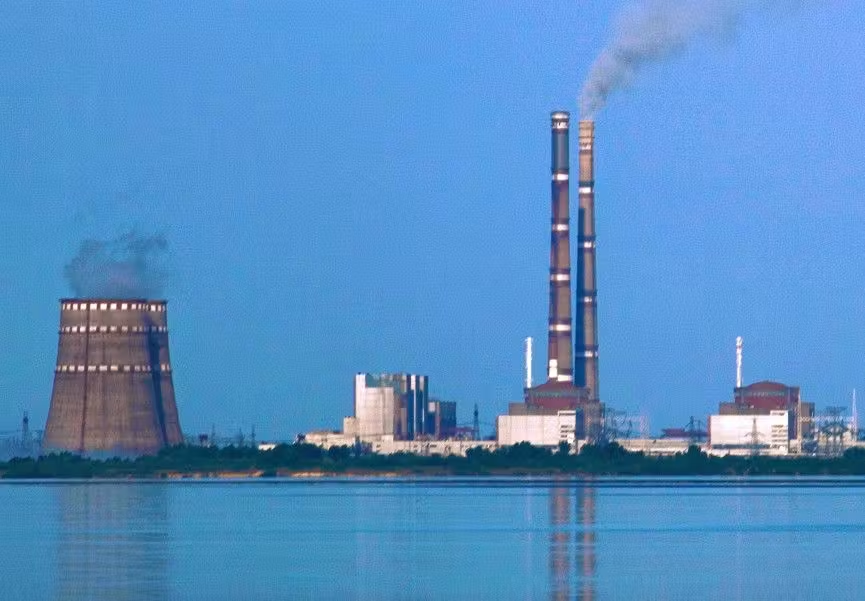
A drone struck the Zaporizhia nuclear power plant, the largest in Europe, occupied by Russia in southern Ukraine, the International Atomic Energy Agency (IAEA) announced.
“A drone today struck a building housing a turbine on the site, reportedly causing a hole in its wall,” the Vienna-based IAEA said on Saturday evening on X, citing the local authorities of the plant.
“There should be no attacks of any kind originating from or targeting the plant,” the agency added, citing its director general, Rafael Grossi. “Attacking nuclear sites is playing with fire,” he warned.
The Zaporizhia power plant, the largest in Europe, has been occupied by Russia since March 2022. It is located on the south bank of the Dnieper, a river which acts as a natural front line between the belligerents.
In a statement relayed by Russian media, the Russian public nuclear group Rosatom accused the Ukrainian army of having carried out this deliberate attack, saying that the drone was guided by a fiber optic cable, which would completely exclude “the possibility of an accidental strike”.
“Today we have come closer to an incident that is likely to affect even those who live well beyond the borders of Russia and Ukraine,” warned Rosatom boss Alexei Likhachev.
Rejecting these accusations, the Ukrainian Foreign Ministry said in a statement that they lacked “logic”.
“It is not clear why Ukraine would strike its own nuclear power plant located on its own territory, which it itself seeks to regain under its sovereign control,” the ministry said.
“We consider these statements to be a new disinformation operation carried out by the occupying state,” he added.
According to Rosatom, the strike breached the wall of the engine room, but did not damage the plant’s essential equipment.
The Russian Defense Ministry said the damage caused by the drone was “10 meters from the reactor room.”
Early Sunday afternoon, plant authorities reported a new Ukrainian attack having hit the plant’s transport workshop, a site already targeted several times in recent months.
Six buses and two trucks were destroyed in this attack, according to the same source, which specifies that the plant continues to “operate normally” and that its operational safety is “fully assured”.
Moscow and kyiv have regularly accused each other of running the risk of a nuclear catastrophe through their attacks since the capture of the site by Russian forces.
