
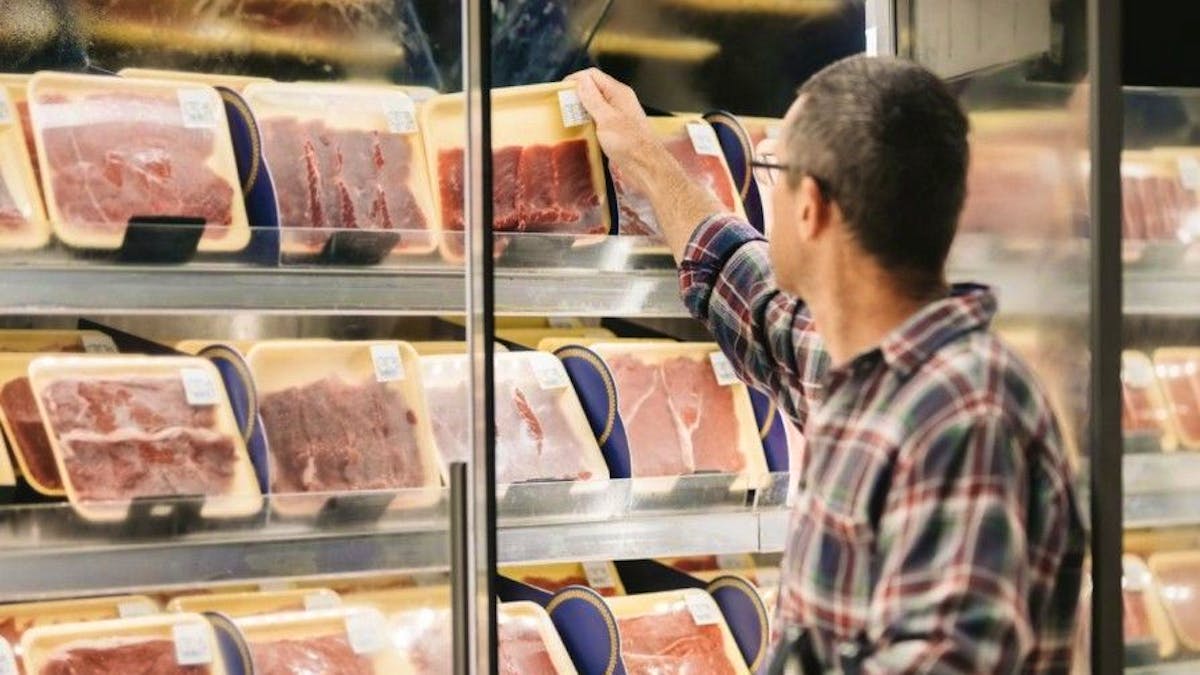
Each person in Switzerland eats around 50 kilos of meat per year. Researcher Saskia Stucki explains the consequences for climate and health and why political solutions are long overdue.
Mrs Stucki, how much meat do we eat in Switzerland?
Current consumption is around 50 kilos per person per year. Every year, more than 80 million animals are slaughtered in our country, ten times more than the number of people living in Switzerland. Worldwide, meat consumption has doubled since the 1960s. This is partly linked to the increase in the world population and partly to increased prosperity. It is predicted that, with rising incomes in emerging countries like India and China, global meat consumption will increase by a further 80% by 2050. In Switzerland, per capita meat consumption was around 60 kilos per year in the 1980s and 1990s, and has been stable for several years, although there are more and more vegetarians and flexitarians.
Is this consumption sustainable?
In addition to adverse effects on animal health and welfare, meat production is one of the main causes of climate change: an estimated 18-20% of global greenhouse gas emissions come from livestock production. The biodiversity crisis is also linked to meat consumption. Soya, for which the tropical forest is cleared in South America, is in fact mainly used in the breeding of livestock. These links are clearly scientifically proven. The Intergovernmental Panel on Climate Change (IPCC), the World Bank and the Organization for Economic Cooperation and Development (OECD) have also recognized that, to protect the environment, it is necessary to attack the food system.
How much meat should we eat so as not to excessively impact the environment?
Agriculture, especially that related to animals, will never be free of emissions. The Planetary Health Diet, which is based on comprehensive scientific evidence, however, offers a reference value for environmentally friendly meat consumption of no more than 300 grams per week. That is to say a little less than 16 kilos per year, that is to say more than three times less than what is consumed today in Switzerland. The new dietary recommendations from the Confederation speak of a maximum meat consumption of two to three times per week.
Meat consumption has stagnated for years at a high level of 50 kilos per capita per year. Why can’t we eat less of it?
It’s a complex question. Currently, the market price of meat reflects less than half of real costs. Remaining costs, such as health costs from growing antibiotic resistance, animal suffering or emissions, are borne by society or outsourced. If all these costs were taken into account, meat would have to be more than twice as expensive. The consequence would likely see many people eating less meat and turning more to cheaper plant-based alternatives.
To what extent does our relationship with meat play a role?
I’m no expert on this, but in psychology there is a concept called the “meat paradox.” Most people are concerned about the welfare of animals and the protection of nature. They don’t want animals to suffer, but still eat meat. Behind this there may be psychological mechanisms, such as repression, rationalization or prioritization. This is for example the case when we say to ourselves that “they are only animals”. Habit and tradition also play an important role.
What are the strategies to reduce meat consumption?
An effective approach would be to make a meat-free menu the norm, particularly in public hospitals. These are called “default nudges.” Studies show that this simple measure can increase the consumption of vegetarian menus tenfold. Information campaigns are also possible.
Is this enough?
From a scientific point of view, it is clear that no. We know that labels and information campaigns have relatively little impact. On the other hand, financial measures, such as subsidies, taxes or public investments, have a much greater impact. Currently, in the European Union, 1200 times more public money is invested in the meat industry than in plant-based alternatives. A CO₂ or methane tax on meat is also an idea that is now gaining ground. It has already been implemented for fossil fuels.
The ways to reduce meat consumption are therefore known. Why are they not yet applied?
The means and solutions exist, but the political will is often lacking. Politicians may be afraid of alienating their constituents. Nor should we neglect the considerable political power of agriculture, including in Switzerland. It is interesting to note that in our country it is estimated that 5 to 10% of the population is vegetarian. Farmers represent only 2% of the population.
Are there countries that Switzerland could learn from?
Denmark wants to become the pioneer of the plant-based food transition. A few months ago, the government published, in collaboration with the agricultural sector, a 40-page document containing measures intended for this transition. The plant sector must be strengthened, and taxes on meat are being considered. Continuing training based on plants will also be offered to cooks. To my knowledge, this is the first state that has made the food transition its main focus. But we have to wait and see how all this will be implemented.
People generally don’t like to be talked to about food. How should we behave towards someone who invokes their personal freedom when discussing their meat consumption?
For many people, food is a private matter. That said, however, the state intervenes in our lives when something goes wrong. In the past, you could smoke on the train, which is no longer possible today due to health policy. Personal freedom reaches its limits when conflicting public interests prevail. When it comes to meat, I think that limit has been reached.
We are the future
The national campaign “We are the future” is an initiative launched in 2020 which aims to inspire and stimulate thinking on the themes of energy efficiency, climate protection and the environment. Together with renowned partners from the private sector, with the support of SuisseEnergie and Tamedia as an established media partner, it highlights different aspects of an energy-efficient and climate-friendly future.
