
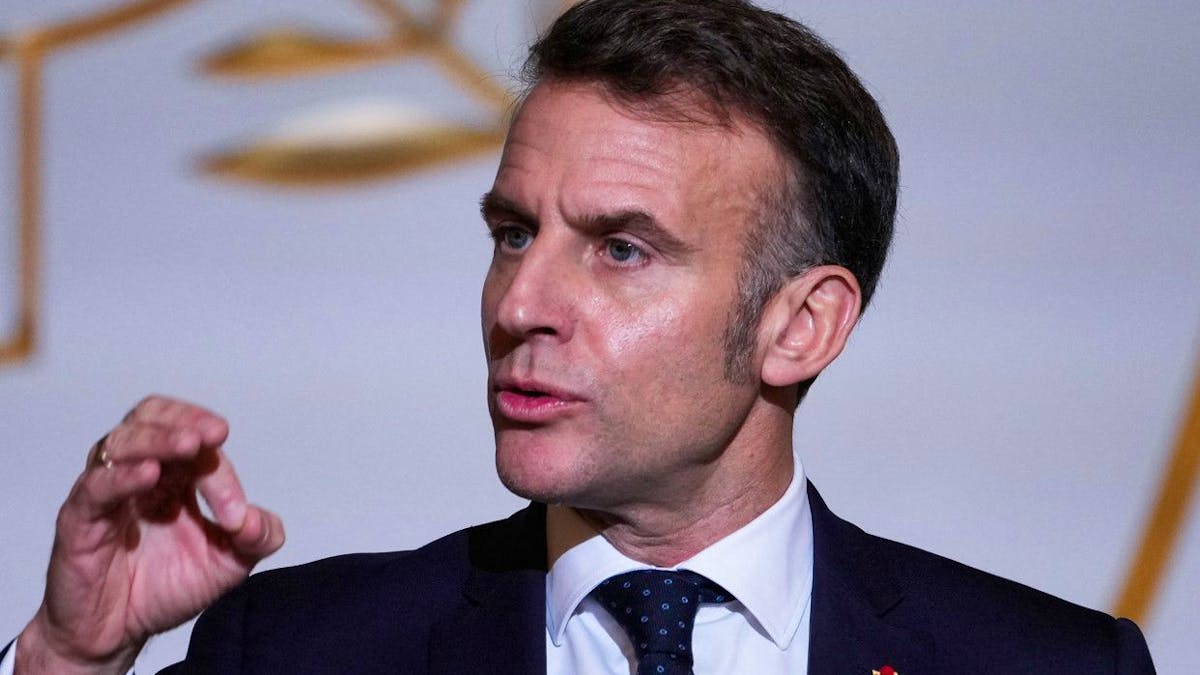
Should social networks be banned for under 15s and cell phones in high schools? French MPs are expected to adopt on Monday these measures seeking to protect the health of adolescents, supported with all their weight by the government and President Emmanuel Macron.
The bill will be examined from 4 p.m., and should, barring any surprises, receive the green light from the Assembly, the lower house. The text will then go to the Senate in “mid-February”, announced Gabriel Attal, the boss of the Renaissance deputies (presidential majority) and former Prime Minister, Monday morning, for entry into force from “September 1”.
Networks like TikTok, Snapchat and Instagram, which have become omnipresent in the lives of adolescents, are seriously harming their mental health, the National Health Security Agency (ANSES) warned at the beginning of the month.
The risks listed are numerous, between cyberharassment, constant comparison or exposure to violent content. Also highlighted: attention capture systems, to the detriment of sleep.
“The emotions of our children and adolescents are not for sale or manipulation, neither by American platforms, nor by Chinese algorithms,” declared Emmanuel Macron in a video broadcast on Saturday, attached to this reform which would mark his second five-year term.
The government wants to move quickly, with measures implemented from the start of the 2026 school year.
“Simplistic” solution
An amendment provides that “access to an online social network service provided by an online platform is prohibited for minors under fifteen years of age”. It excludes from the ban “online encyclopedias” or even “educational directories”.
The ban on mobile phones in schools and colleges must be extended to high schools, some of which are already experimenting with the measure.
The deputy for La France insoumise (LFI, radical left) Arnaud Saint-Martin denounced “digital paternalism”. Environmentalist Steevy Gustave criticized a “simplistic” solution.
The ban on social networks is, however, supported by the National Rally (far right), the center and the right. The socialists reserve their decision for clarification on the permitted exceptions, according to MP Arthur Delaporte.
The draft text was rewritten after a very critical opinion from the Council of State, which was particularly concerned about a general ban that was too broad. The version arriving in the hemicycle on Monday establishes a system with prohibited social networks, listed by decree, and others subject to parental authorization.
But this solution made the Élysée cringe, which deemed it too complex and inapplicable.
Careful formulation
The main difficulty lies in the obligation to comply with European law – more specifically with its Digital Services Regulation (DSA). The objective: not to suffer the same fate as a 2023 law establishing a numerical majority at 15 years of age, but which could never be applied.
Since the summer, the publication by the European Commission of new guidelines has paved the way for regulation, in national law, of access to social networks.
For the ban to become a reality, an effective age verification system must in any case be put in place. Work is underway at European level.
France can also take inspiration from Australia, where social networks were banned at the beginning of December for those under 16.
