
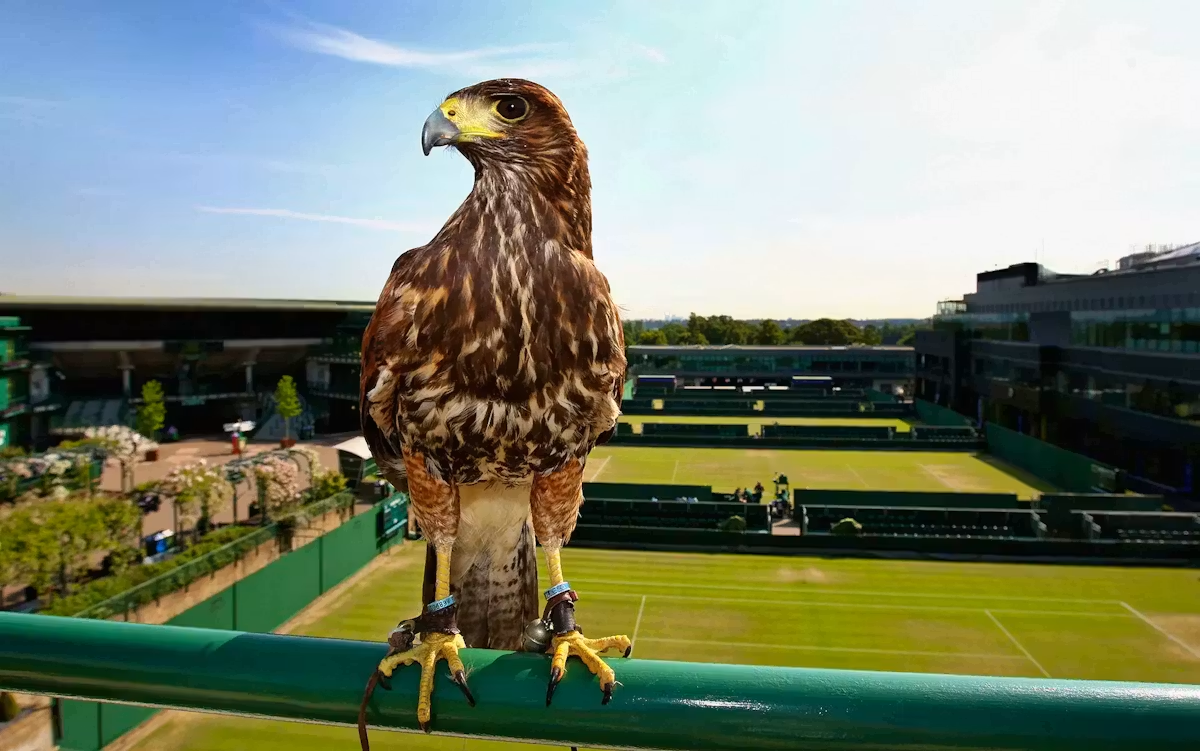
As day begins to dawn on the tennis courts at Wimbledon, the bird of prey Rufus is on the lookout, ready to protect the famous turf: the pigeons, who love to peck at the seeds on the courts, would do best to stay away.
Rufus is a star of Wimbledon, the most prestigious lawn tennis tournament. His longevity is one of the reasons: his career started during the 2008 edition.
Every day of the tournament, it is visible above Central and also flies over the other courts. But only early in the morning, between 4 a.m. and 9 a.m., before the public arrives.
“We start at sunrise, when the birds become active: this is the best time to walk around the grounds and check if pigeons are likely to cause problems during the day,” explains Rufus’s owner, falconer Donna Davis, 59 years old.
The role of the raptor is to disperse the pigeons that come to feed on the courts and to prevent them from making their nests under the roofs.
Because a match in progress is not enough to dissuade these birds from settling on the field to enjoy their dose of grass, “like caviar” for them, says Donna Davis.
In 1999, the falconer was watching the semi-final between Pete Sampras and Tim Henman on television when birds took their place on the court.
The various attempts to scare them away – including Pete Sampras who tried to scare them with his racket – did not work, the match had to be interrupted.
“I couldn’t believe my eyes,” recalls Donna Davis, who then grabbed her phone to call Wimbledon. “I told them: ‘I think I can help you, I make birds of prey fly’.”
This is how Rufus’ predecessor, Hamish, came into service.
Search operation
The demonstration was conclusive: Donna Davis made Hamish, a Harris’s hawk, fly and the pigeons fled. “They knew they would serve as a meal” to Hamish otherwise.
Rufus took over when he was 18 weeks old. Now it has a wingspan of about one meter and weighs 700 grams. It is dark brown and has white plumage on the back and – of course – a piercing gaze.
On the Central, he sits on the back of the audience seats, and observes any movement while calm still reigns over the short desert.
Donna Davis is constantly asked about Rufus’ successor, but it’s not on the agenda, she says: these birds of prey from America often live up to 30 years.
If Rufus could talk, he’d say, “Wait a minute, you’re already retiring me!” jokes the falconer.
“People have even asked me here if, the day he passes the gun to the left – hide his ears – we could have him naturalized for the museum,” continues Donna Davis with a laugh.
In the meantime, there is no shortage of work. When he’s not at Wimbledon, Rufus hunts birds at Westminster Abbey or on the cricket pitch at Lord’s Cricket Ground. And when he’s not working, he’s at home in Northamptonshire, in central England.
It was the subject of dozens, or rather hundreds, of articles in the international press.
He has his own Instagram account, where more than 9,000 people follow his activities.
His notoriety almost cost him dearly: in 2012, he was robbed at Wimbledon.
Donna Davis had left it overnight in her van in a travel crate, but by early morning it had disappeared.
“A real search operation followed to try to find him. We really thought we would never see him again,” she remembers.
It was ultimately journalists from the tabloid “Daily Mail” who found him, in an animal center in south London. “We never really knew what happened,” Donna Davis said.
The next day, it was on the front page of the “Times”, with the headline: “Rufus is back”.
