
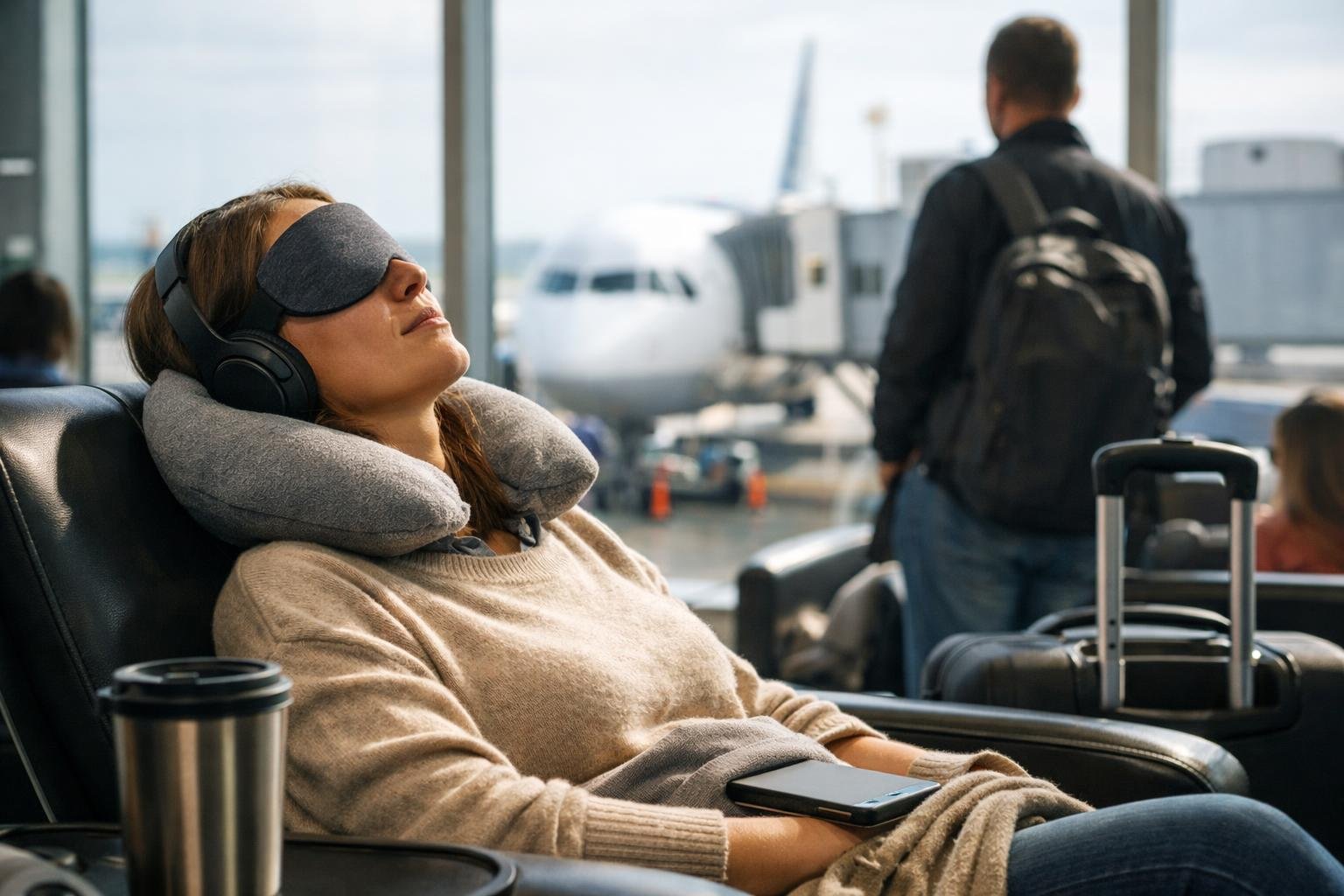
Jet lag does not begin when you land. It often starts much earlier, while you are still walking through the airport, waiting at the gate and behaving as if your body were still at home.
That is why sleep specialists increasingly recommend one simple routine before a long-haul flight: switch to your destination’s time zone as soon as you reach the airport.
Not mentally, vaguely or “when you arrive”. Immediately.
Change your phone clock, plan your meals, decide when to sleep on the plane and manage caffeine according to the time at your destination. The goal is to stop living on departure time before the aircraft even takes off.
Why this works
Jet lag happens when your internal clock is out of sync with the local time. Your body expects darkness, meals and sleep at one rhythm, while the destination demands another. The bigger the time difference, the harder the adjustment.
The airport routine is effective because it gives your brain an early signal: the new day has already started.
If it is morning at your destination, you avoid heavy sleep and use light, movement and perhaps caffeine to stay alert. If it is night there, you dim stimulation, skip unnecessary caffeine, avoid large meals and try to rest on the flight.
This does not erase jet lag completely. But it can reduce the shock.
The mistake most travelers make
Many passengers stay attached to their home schedule for the entire journey. They eat dinner because it is dinnertime where they departed, watch films through what is technically the destination’s night, then land exhausted and confused.
By the time they arrive, their body has received mixed signals for hours.
The destination-time method does the opposite. It turns the airport and flight into a transition period, not dead time.
What to do at the gate
The routine is simple:
- Set your phone and watch to destination time
- Eat only if it makes sense for that time zone
- Avoid caffeine if it is already afternoon or evening there
- Sleep on the plane only when it matches the destination night
- Seek daylight after arrival if it is daytime locally
The most important part is consistency. One good choice will not fix everything, but several aligned signals can help your body adjust faster.
Eastbound flights are usually harder
Traveling east often feels worse because it forces the body to fall asleep earlier than usual. That is why the airport routine matters even more on flights to Europe, Asia or any destination where the clock jumps forward.
For westbound trips, the challenge is usually staying awake longer, which many people tolerate slightly better.
A small habit with a real effect
This routine is not glamorous. It does not require supplements, gadgets or complicated sleep hacking. But it targets the real cause of jet lag: confusion between your body clock and local time.
For travelers who land drained, foggy and awake at 3 a.m., the fix may start before boarding. The moment you enter the airport, stop asking what time it is at home. Start living as if you are already there.
