
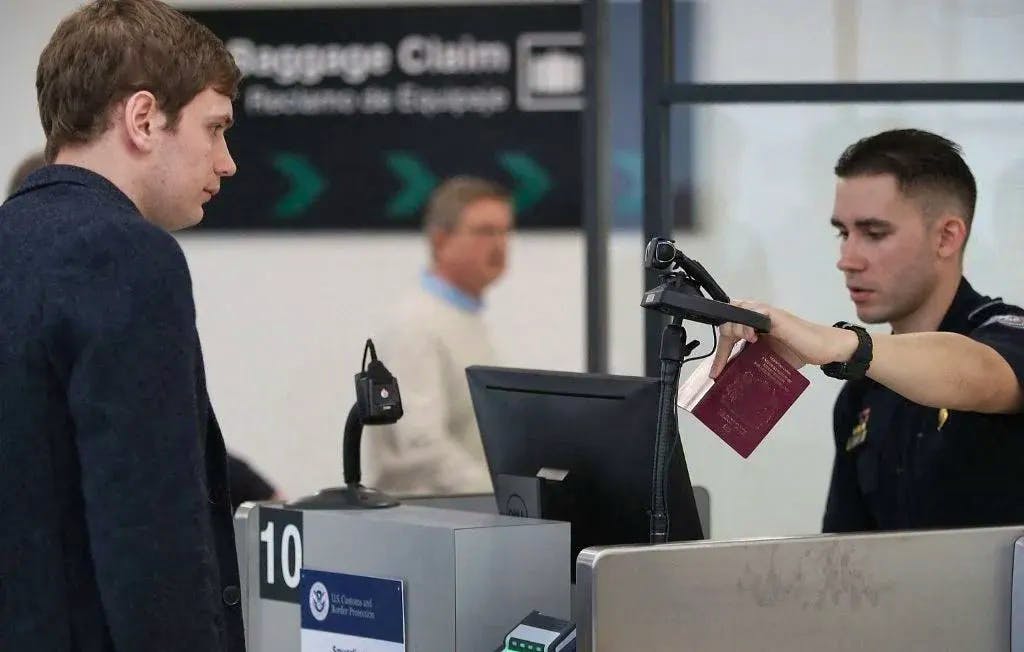
The United States announced on Monday a strengthening of health controls at its borders against the Ebola virus, an epidemic of which infected an American national in the Democratic Republic of Congo (DRC).
Washington will implement health checks for air travelers coming from affected countries in Africa and temporarily restrict the granting of visas for foreigners who have traveled to these areas, announced the Centers for Disease Control and Prevention (CDC), the main health agency in the United States.
These announcements come as the World Health Organization (WHO) declared the Ebola epidemic in the Democratic Republic of Congo an international health emergency.
The CDC said over the weekend it was working to “safely repatriate a small number of Americans directly affected by this outbreak.”
An American citizen contracted the virus “through his work in the Democratic Republic of Congo,” the CDC announced Monday.
The individual showed “symptoms over the weekend and tested positive late Sunday,” and arrangements are being made to transfer him to Germany for treatment, said Satish Pillai, the CDC’s Ebola manager.
“At this time, CDC considers the immediate risk to the U.S. population to be low, but we will continue to evaluate the situation and may adapt public health measures based on new information available,” the health agency said in a statement.
In addition to airport screenings, the CDC announced entry restrictions for foreign nationals who have traveled to Uganda, the Democratic Republic of Congo (DRC) or South Sudan in the past 21 days.
The United States Embassy in Kampala announced the temporary suspension of all its visa services and indicated that affected applicants have been informed.
Asked by the press about Ebola during an event organized at the White House on health insurance, Donald Trump said he was “concerned”. “I think it (Ebola) has been confined to Africa for the moment, but it is something that has seen an outbreak,” the American president simply declared.
Withdrawal from WHO
There is no vaccine or specific treatment against the strain responsible for the spread of this highly contagious disease.
According to the latest figures published on Sunday by the Minister of Health of the DRC, 91 deaths are linked to the current upsurge in cases.
Around 350 suspected cases have been reported and most of those infected are between 20 and 39 years old.
The United States, under President Donald Trump, officially withdrew from the WHO and reduced funding for its Agency for International Development (USAID), which was heavily involved in responding to previous Ebola outbreaks.
The CDC assured that it was collaborating with international partners and the health services of the countries concerned. The measures announced Monday include “the deployment of CDC personnel to support efforts to contain the outbreak in affected regions” as well as assistance with laboratory testing and contact tracing.
The US State Department said in a statement on Monday that it had released $13 million in aid for “immediate response” operations.
But Matthew Kavanagh, director of the Center for Global Health Policy and Politics at Georgetown University in Washington, calls the United States’ response “disappointing.”
For him, border controls are “more theater than effective public health measures”.
He said in the past, Washington responded quickly to Ebola outbreaks by coordinating the action of the CDC, USAID and nongovernmental organizations.
“The Trump administration claimed that it could negotiate bilateral agreements to do without the WHO. This epidemic shows that this strategy does not work,” Mr. Kavanagh told AFP.
