
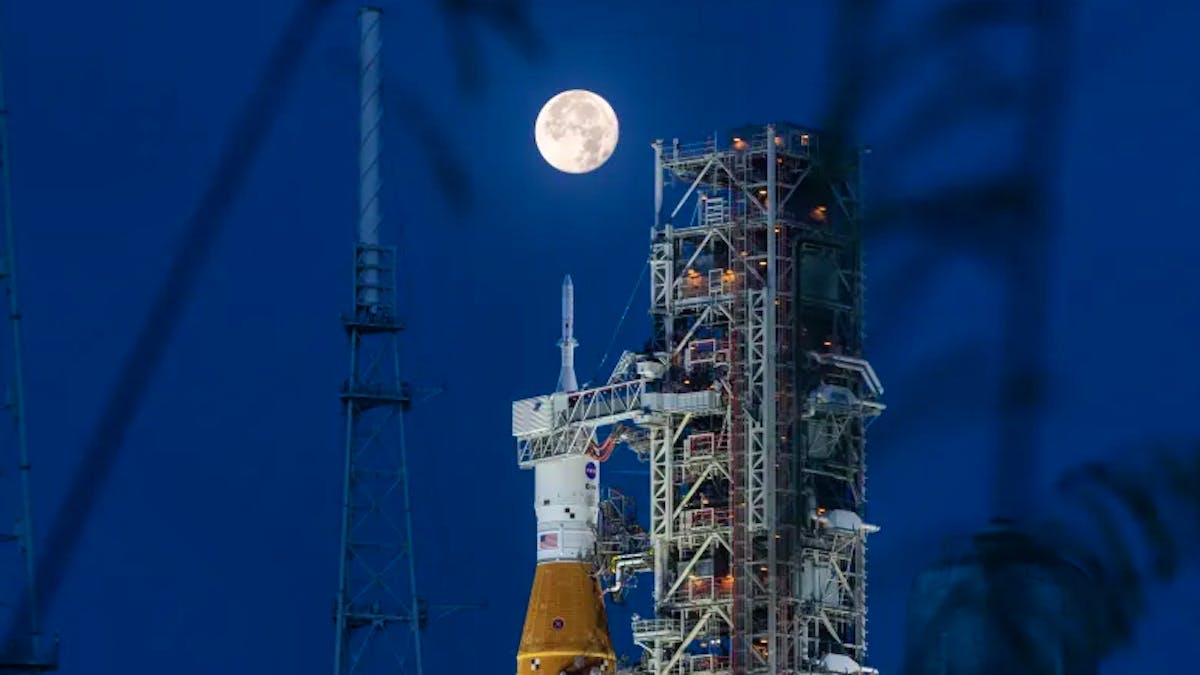
NASA announced on Friday a major overhaul of its Artemis lunar program, which has suffered multiple delays in recent years, in order to be able to ensure a return of Americans to the lunar surface as planned in 2028.
This announcement comes after the launch of the highly anticipated Artemis 2 mission, which will send astronauts around the Moon for the first time in more than 50 years, was delayed once again last week following a technical problem on the rocket.
Faced with this umpteenth postponement and the pressure exerted by China, a rival power of the United States which also aims to send men to the Moon by 2030 and install a base there, NASA has announced to change its plans.
To meet the 2028 deadline, the American space agency will “add missions” between the Artemis 2 flight, now scheduled for early April at the earliest, and a return to the lunar surface, NASA boss Jared Isaacman said at a press conference. If the Artemis 2 program will remain unchanged, that of the following missions will greatly evolve, he indicated.
No moon landing for Artemis 3
Artemis 3 will no longer include a moon landing and this crucial step marking the great return of the Americans to the lunar surface will be attempted later, during two missions in 2028, he specified.
This overhaul aims to bring the architecture of the current program closer to that of the famous Apollo program which enabled the United States in the 1960s and 1970s to beat the Soviet Union during the first race to the Moon. This program, which consisted of multiple close-quarters missions of increasing difficulty, transported the only human beings to the lunar surface.
The Artemis lunar program, announced during the first presidency of Donald Trump, consisted of a few spaced out missions with ambitious objectives. Its goal is to establish a lasting human presence on the Moon and prepare for future missions to Mars.
