
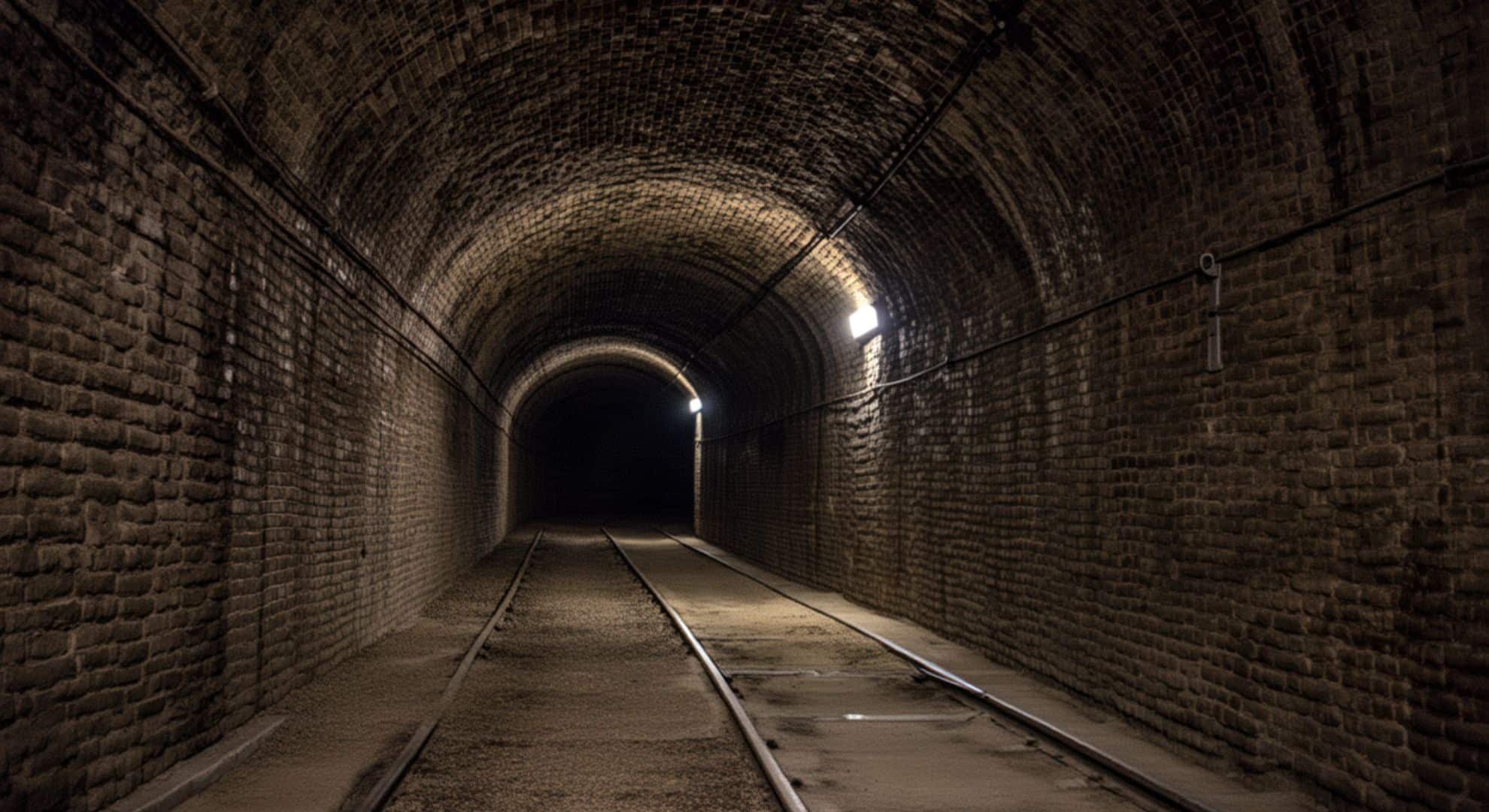
Beneath the city’s streets, an industrial hush lingers. The long-disused freight tunnels that once threaded under downtown blocks are edging toward a second life: curated, guided, tightly managed. Local officials and preservation advocates say the project could marry heritage tourism with urban education, turning a forgotten labyrinth into a public asset.
The idea carries a certain electricity—a chance to step into Chicago’s infrastructural subconscious, to see how coal, mail, and cold storage once pulsed through the Loop without ever touching the surface. “It’s a rare opportunity to walk through the machinery that built the modern city,” said one preservation advocate.
A subterranean time capsule
Stretching for miles beneath downtown, the network formed a hidden artery of early 20th-century commerce. Trains hauled newsprint, produce, and coal to basements and boilers, freeing congested streets above. The system later faded as trucking grew dominant, and by mid-century the tunnels were largely silent.
Their bones remain: brick-lined corridors, arched portals, and steel switches dulled by dust. In places, you glimpse utility conduits and flood-control retrofitting, reminders of the 1992 deluge that turned segments into subterranean rivers. Preservationists see a palimpsest—layered infrastructure that tells a story about engineering, efficiency, and city risk.
What the tours could look like
Planners imagine small-group tours, led by trained guides, on defined routes with controlled lighting and timed entries. The focus would be on context and safety, not thrills. “We can make it safe without sanitizing the past,” a safety consultant noted.
- Potential highlights: historic junctions that fed major buildings; a preserved loading bay; interpretive panels on labor, logistics, and flood mitigation; a sound-and-light segment recreating freight movements; and a short walk that reveals the tunnel’s scale relative to streets above.
Guides would weave stories drawn from archives and former workers, from the politics of coal to the economics of paper delivery. Expect measured ambience: cooler air, a faint mineral scent, and the tightened focus that comes with low, even light.
Safety, access, and costs
Any public opening hinges on rigorous standards: air-quality testing, emergency exits, non-slip walkways, and redundant communications. Accessibility is a core question; elevators or inclined platforms may be needed to reach depth without strain. “If we open a door, it must be open to everyone,” said a disability-rights organizer.
Costs could be shared among city agencies, a cultural partner, and timed-ticket revenue. Phased work—stabilize, interpret, then expand—would limit early risk and prove public interest before deeper investment. Some sections may remain off-limits due to utilities or fragile masonry; a pilot route could thread the safest, most illustrative segments.
How it compares
Below is a high-level comparison of the proposed Chicago experience with two well-known underground tours elsewhere.
| Feature | Chicago Freight Tunnels (proposed) | Seattle Underground Tour | Paris Catacombs |
|---|---|---|---|
| Primary theme | Industrial logistics and urban infrastructure | Pioneer-era streets beneath the modern city | Ossuary and limestone quarries |
| Tone | Educational, safety-forward, limited access | Anecdotal, history-with-humor | Solemn, highly regulated |
| Environment | Brick-lined freight corridors | Buried storefront facades | Bone-lined galleries |
| Group size | Small, timed entries | Medium, rolling groups | Small to medium, strictly capped |
| Key risks | Air quality, flooding controls, utilities | Low ceilings, uneven surfaces | Humidity, crowd management |
| Interpretation | Engineering, labor, urban systems | Frontier commerce stories | Mortality, geology, civic order |
“Comparisons help set expectations,” said a museum planner. “But each site has its voice, and Chicago’s voice is the grammar of infrastructure.”
Weighing benefits and concerns
Supporters argue the tours would protect the tunnels by making them visible, funding maintenance through tickets, and building public literacy about what lies beneath our feet. The project could spur research, school programs, and new exhibits on logistics, climate resilience, and urban design.
Skeptics worry about costs, mission creep, and the temptation to over-theatricalize a sober work space. Nearby businesses raise questions about vibrations, security, and insurance. Environmental groups push for climate screens: groundwater monitoring, low-energy lighting, and materials that won’t shed microplastics underground. “This is a shared resource,” one advocate said. “Respect the place, or don’t open it at all.”
A cautious green light
If a pilot route advances, look for public meetings, a design prototype, and a brief, invite-only soft launch. Data—visitor flow, incident reports, and air-quality metrics—would shape the next phase. That staged approach reflects Chicago’s best habits: test, measure, and only then scale.
Underground, the past still feels close—close enough to touch, yet layered with modern obligations. Done with care, a dark corridor may become a bright lesson: how cities work, how they fail, and how they learn to keep moving forward.
