
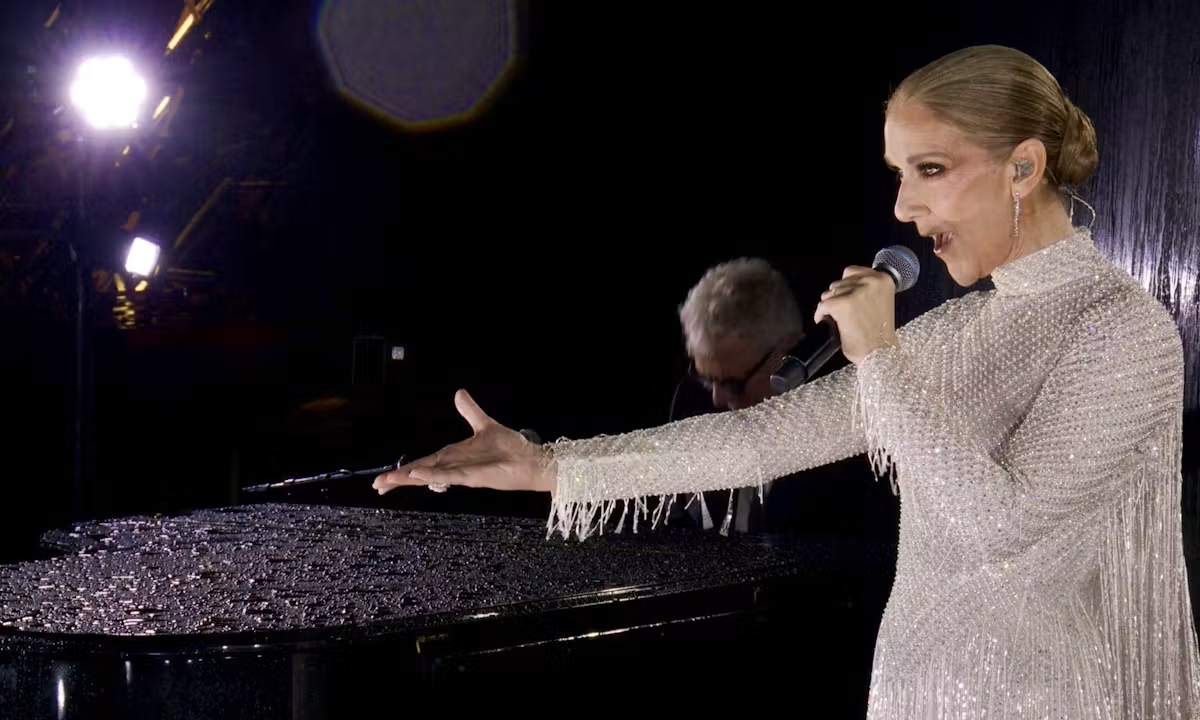
Onlookers from the big capitals have their meetings. There are peak hours when the figurines of the astrological clocks start moving, those of the changing of the guard or the feeding of the gorillas, at the zoo. In Paris, 6 p.m. is a gathering signal for Céline fans looking for an appearance.
The media relay these moments when the diva comes daily to show off a new extravagant outfit in front of her palace and – sometimes – to sing a few notes on the sidewalk. We see her again saying she is “so happy to be in Paris” while pretending to wipe away two crocodile tears.
And the comments flooded in on social networks: “Céline is so natural and generous”, “Dion doesn’t care about us. It was formatted to express artificial emotions.
The phenomenon touches on a central tension in modern pop culture: the line between authenticity and marketing strategy. As we know, in the 1980s – 1990s, the transition from little Quebec singer to world icon was the subject of a metamorphosis skillfully orchestrated by her manager René Angélil and his record company.
To conquer the English-speaking market, its image has been profoundly reworked: intensive English lessons, complete makeover, stage choreographies and adoption of the codes of the American mainstream, which values grandiloquence: vocal flights and theatrical gestures. This expressiveness is caricatured by part of European criticism, which sees only calculation and artifice.
Unlike distant artists, Céline Dion has built her career on perceived transparency. When she exposes her private life to the point of allowing herself to be filmed in the midst of the illness that affects her, her audience does not perceive a role, but a diva who experiences her emotions at face value.
What if most fans aren’t fooled, suspecting that it’s a commercial machine, but still looking for the emotional intensity that this show gives them?
Your opinion deserves more than a comment? Submit an article!
Your voice deserves to be heard. Expand your views here.
