
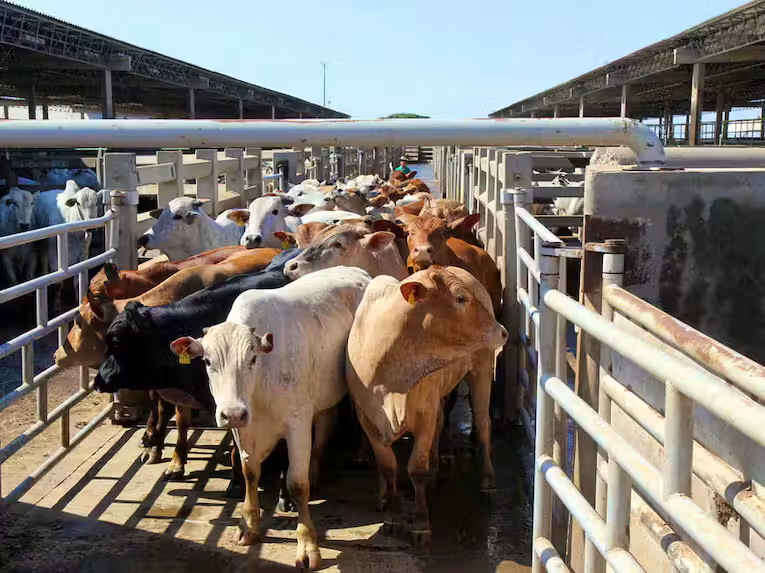
The European Union will suspend, from Thursday, imports of Brazilian poultry and beef, indicated Brussels, which is awaiting guarantees from Brazil on compliance with its health rules. At this stage, the European Commission criticizes Brazil for not having provided sufficient guarantees on the compliance of its products with European rules against the abusive use of antibiotics in livestock farming. “Brazil is an important partner of the EU and we are working closely, constructively and positively, with the Brazilian authorities to ensure their compliance with these requirements. Once this compliance has been demonstrated, exports to the EU will be able to resume,” a spokesperson for the European executive told AFP on Monday evening.
The suspension of Brazilian imports also concerns eggs and honey. And Brussels did not wish to give a timetable for the resumption of imports. Concerning poultry and honey, an audit is underway and must be completed on Friday. If it proves conclusive and European countries give the green light, Brazilian poultry exports to the EU could again be authorized in the coming weeks. However, the deadlines could be longer for beef. “Due to the length of production cycles depending on the animal species concerned, the date from which Brazil could be able to certify its compliance with EU requirements varies depending on the sector,” specifies the European Commission.
Drug resistance of microbes
The EU wants to give proof of its vigilance, even though it has been strongly criticized by the agricultural sector and France after signing a free trade agreement in January 2026 with the Latin American countries of Mercosur: Argentina, Brazil, Uruguay and Paraguay. In 2025, Brazil was the second largest exporter of beef to the EU, with more than 92,000 tonnes of beef products. According to European rules, the use of antimicrobials in breeding with the aim of promoting growth or increasing yields is prohibited.
Animals also cannot be treated with antimicrobials reserved for human infections. These measures are part of a European policy aimed at combating the resistance of microbes to drugs, by avoiding unnecessary recourse to antibiotic treatments. The world has seen an explosion in the number of drug-resistant infections in recent years.
According to the World Health Organization, antimicrobial-resistant (AMR) superbugs are directly responsible for more than one million deaths and contribute to nearly five million additional deaths each year.
