
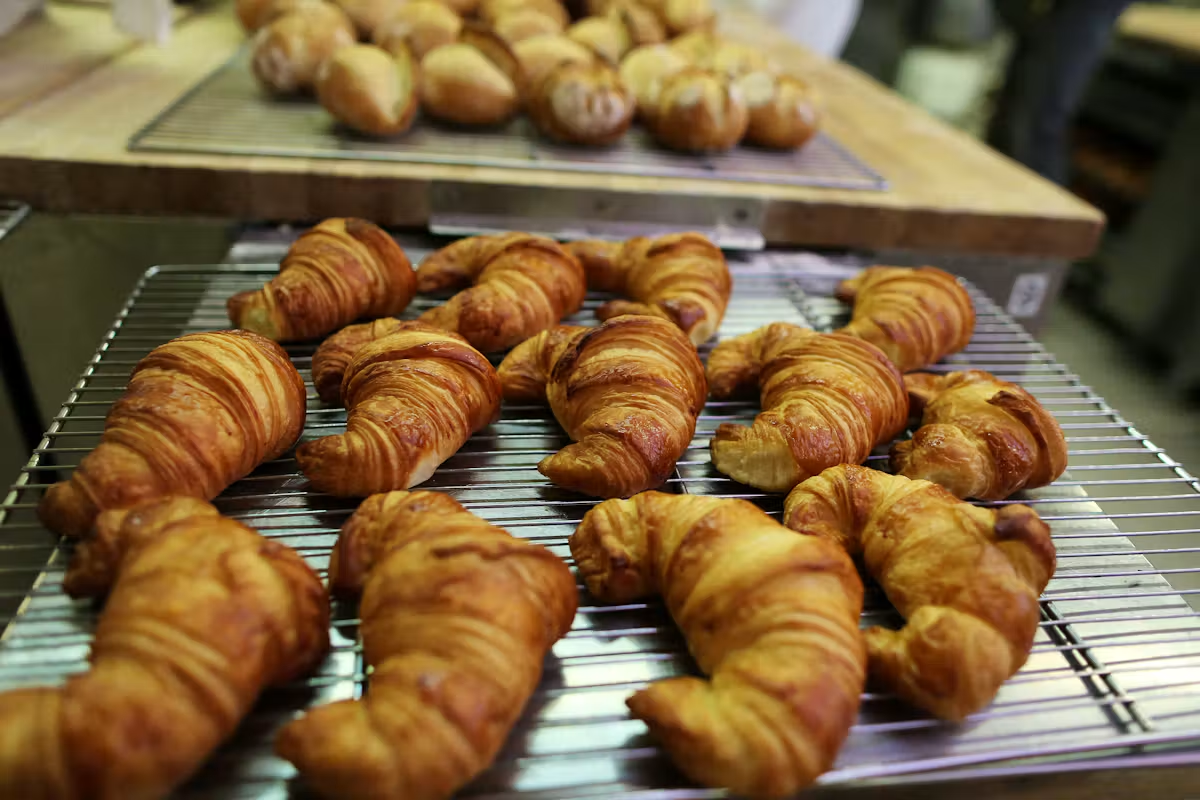
Were you thinking of buying a croissant or a roll made in Switzerland by going to Migros or the Coop? Not so sure! Some products sold in the bakery sections of the two distribution giants have traveled several hundred kilometers before arriving on your plate.
According to a survey by the “Berner Zeitung”, around 10% of the bakery products offered by Migros and Coop come from abroad. These include German rolls, French or Austrian pretzels, Irish muffins and even Italian pastries.
The two brands emphasize, however, that 90% of their products are made in Switzerland. At Coop, this proportion even reaches 99% for large loaves.
Exploding imports
But nationally, the trend worries producers. Since 1988, imports of raw dough pieces have increased nearly twenty-fold, while those of pre-cooked or already cooked products have increased eight-fold.
The reason is mainly economic. Customs duties on finished products are lower than those applied to certain raw materials. Therefore, importing ready-to-bake pastries is often cheaper than making them in Switzerland.
According to David von Wattenwyl, president of the Swiss Cereal Producers Association, a croissant made in Switzerland costs around one franc to produce, compared to just 30 cents for an imported croissant. A price difference that weighs heavily on the entire industry. “Not only the mills and bakeries, but also us farmers are under enormous pressure from abroad,” he lamented to the “Berner Zeitung”.
Farmers under pressure
This competition also affects farmers. More than 20,000 tonnes of Swiss bread cereals end up on the animal feed market, due to a lack of sufficient outlets.
Faced with this situation, the Federal Parliament accepted a motion aimed at removing customs advantages granted to imported bakery products.
In the meantime, since February 2025, traders must indicate the origin of their products. Enough to allow consumers to know if their croissant is truly Swiss.
