
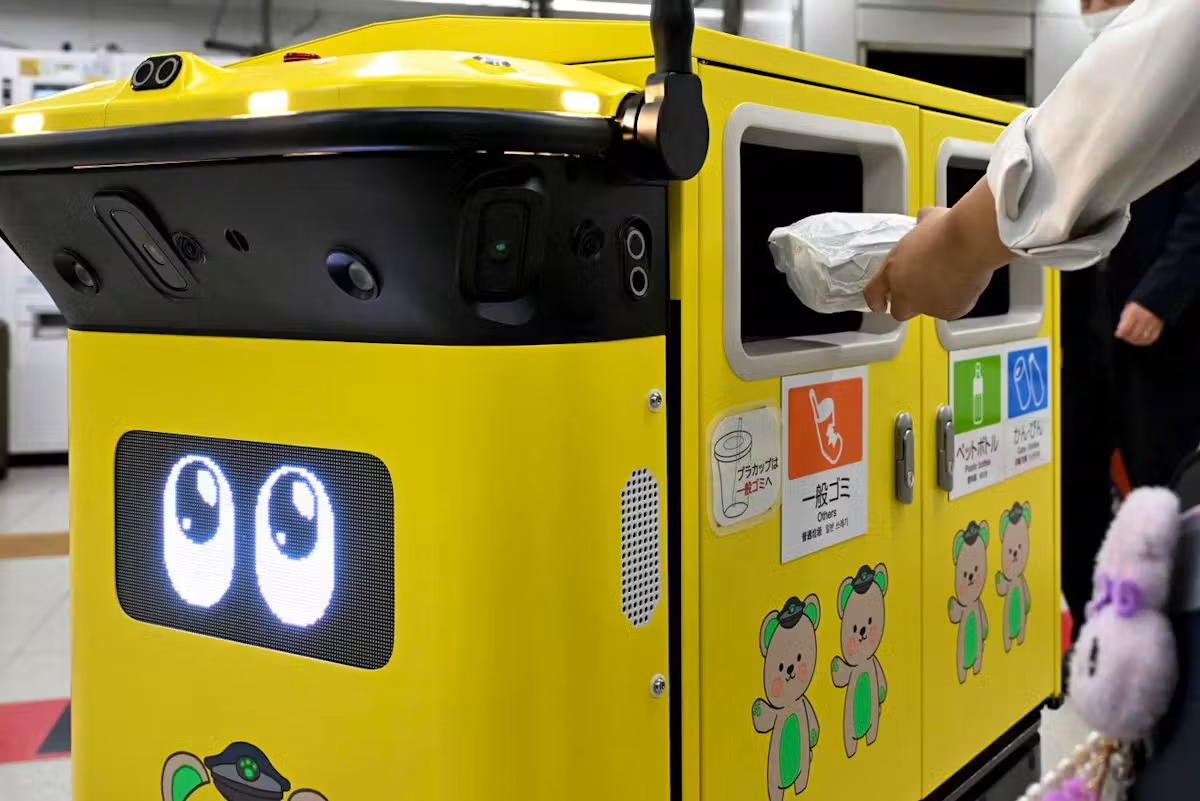
The world’s busiest train station in the heart of Tokyo, Japan, is testing whether mobile robotic trash cans can ease the workload of maintenance workers, a representative of the train operator said Friday.
Shinjuku Station is a large transportation complex served by several railway companies that welcomes more than 2.7 million travelers every day. It holds the Guinness World Record for the busiest train station in the world.
In part of the station operated by the East Japan Railway (JR East), trash cans are emptied manually more than ten times a day, although the number has been reduced in recent years for cleanliness and safety reasons.
JR East is currently testing three automated trash cans, each measuring just over a meter tall and moving at a conservative speed of 20 centimeters per second.
Designed to be slow
“We wanted to test to what extent such a device can operate automatically and safely in an environment like that of Shinjuku Station,” Shinya Kawamichi, head of research at JR East, told AFP.
“We want to see what difference these mobile bins that collect waste make, and whether people are actually willing to throw their waste in them,” he added.
This pilot project, which will run until the end of November, will put the robots to the test in the station’s always bustling underground hall, where they are supposed to transport waste to the service agents.
Kawamichi said the robots were designed to be “slow, so people can throw their trash into them and they can stop at any time.”
The company also wanted to test whether the robots were capable of making their way through a dense crowd and whether they would be well accepted by users, with a view to expanding future uses of this technology.
These bulky machines with bulging eyes were a big hit with tourists, many of whom stopped to take photos of them.
“Their eyes are really cute,” said Chris Genseliein, a 30-year-old German train conductor, adding that he had difficulty finding trash cans at Japanese train stations.
