
I prepared a column on the child kings. You certainly know some of these children who throw a tantrum because someone refuses them an ice cream at the swimming pool or the biggest dinosaur in the store. To avoid crises, their parents excuse them from household chores or from giving up their seat to an elderly person on the bus.
Sometimes, this behavior is due to a disorder that seriously handicaps the child. But most often, it comes from a destabilizing pedagogy, that of poor parents who set no limits, no framework, no benchmarks, who lack consistency and prefer to give in to the first anger.
What happens to these limitless children when they grow up? Well, adults like you and me. Egocentrics who care most about themselves and rarely about others or the common good. Of freedom, they especially retain their own, and readily forget that it ends where that of others begins. They resolve their dilemmas with a clever “if I don’t do it, someone else will do it.”
Our interests come before values
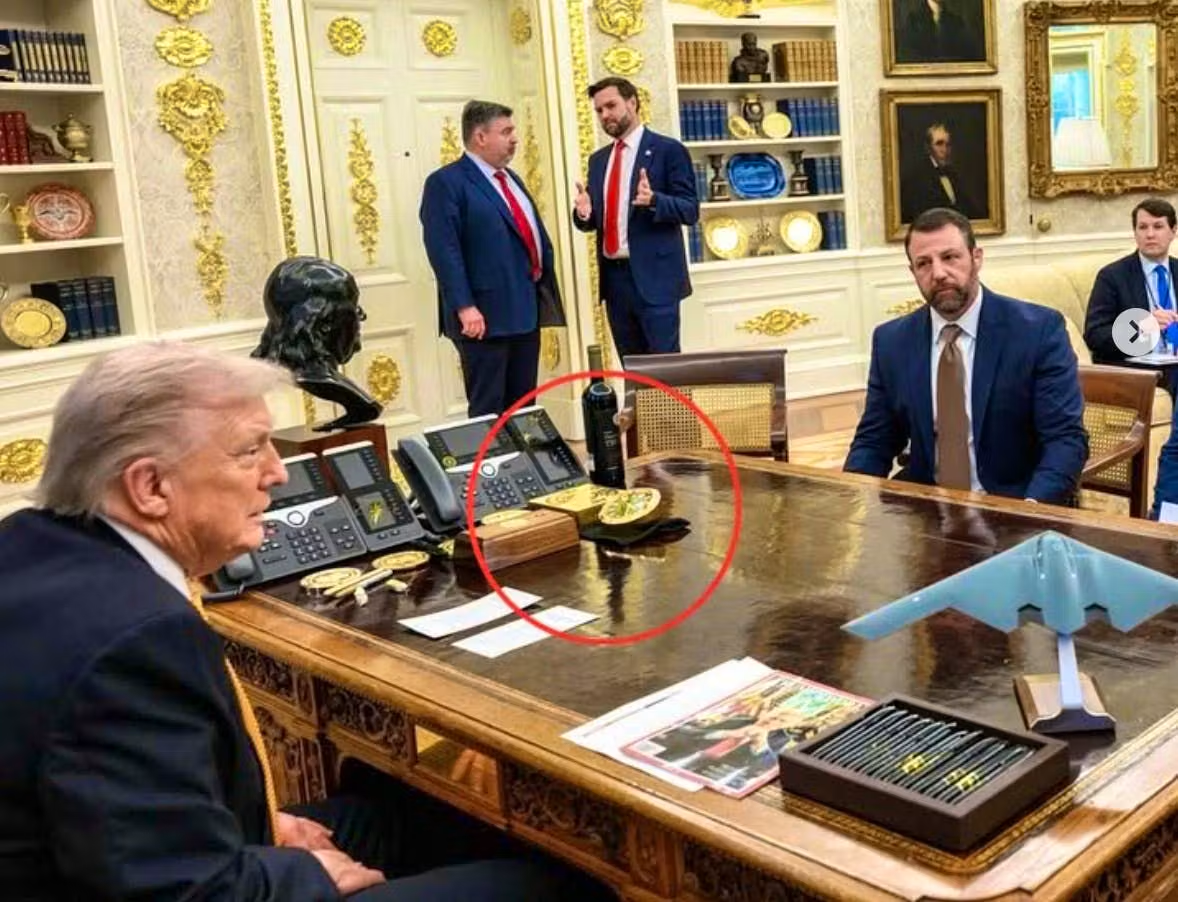
Well, that’s the kind of talk that dictates our political decisions, right? We are talking about interest and no longer about values. What matters is our profit. Is it in our interest, French-speaking people, Swiss people, Europeans? And there is little concern about the consequences this could have on others. This applies as much when we vote for a tax cut, when we buy a piece of furniture or when we coax Donald Trump with a golden clock to lower our customs duties. This is also the operation of Donald Trump himself who has become richer by 2.7 to 3 billion $ since the start of his second presidency.
What, in other societies or in other times, would appear as a taboo, a dishonor or corruption is for us, Westerners, a virtue.
No conflict of interest with the king. As Louis XIV said: “The State is me.” And yet, by overthrowing the Ancien Régime more than two centuries ago, the Revolution proclaimed new and powerful values: freedom; equality, which we could call equity; fraternity, which we could call solidarity; universalism; secularism.
But here we are rather in the regime of child kings: we cut off the head of the monarch, but it is to promise everyone the chance to be king or queen. The sovereign is no longer the people as a whole, it is each of us. We want nuclear power, but not landfill in our community. We want a villa with a view of Lavaux for ourselves, even if it means damaging the landscape for everyone else.
The stooge syndrome
We boast of a VIP box, a first-class ticket, a further trip, a vehicle faster and heavier than the others. This is our driving force, we, child kings of the planet: the search for an advantage, a privilege. We readily tell ourselves that the Revolution abolished privileges. It did eliminate the society of the king, the nobility and the clergy, but it left us with a state of mind: the “stooge syndrome”.
This is what La Boétie explained in the 16th century in his “Discourse on voluntary servitude”. The tyrant is alone. There are many of us. So why do we choose bondage? Well, we put up with it in the hope, one day, of being like him and taking his place! We are not going to revolt against what we aspire to become.
We prefer to believe in our hypothetical fortune rather than in equal opportunities for everyone.
“If we can’t stand the child king who dictates his law on the bus, let’s remember that we adults are not so different.”
So in secret, we defend inheritance, private property and capital, these advantages that we receive without doing anything. But in public, we summon effort, work, merit, individual responsibility. A whole mythology which serves above all to justify inequalities rather than to reduce them, since it allows us to believe that we deserve our successes and are responsible for our failures.
But who deserves an inherited fortune? Or simply being born Swiss in Switzerland? What merit is there in landing a job using Dad’s address book? And who is responsible for being born into a poor family? Stateless in Gaza? Orphaned in Bangladesh?
So if we can’t stand the child king who dictates his law on the bus, let’s remember that we, adults, are not so different. We could already learn to live together in a limited space, whether on the scale of the bus or the planet.
This column is published in partnership with the show The Fine Talkersbroadcast every Sunday on RTS La Première.
Your opinion deserves more than a comment? Submit an article!
Your voice deserves to be heard. Expand your views here.
