
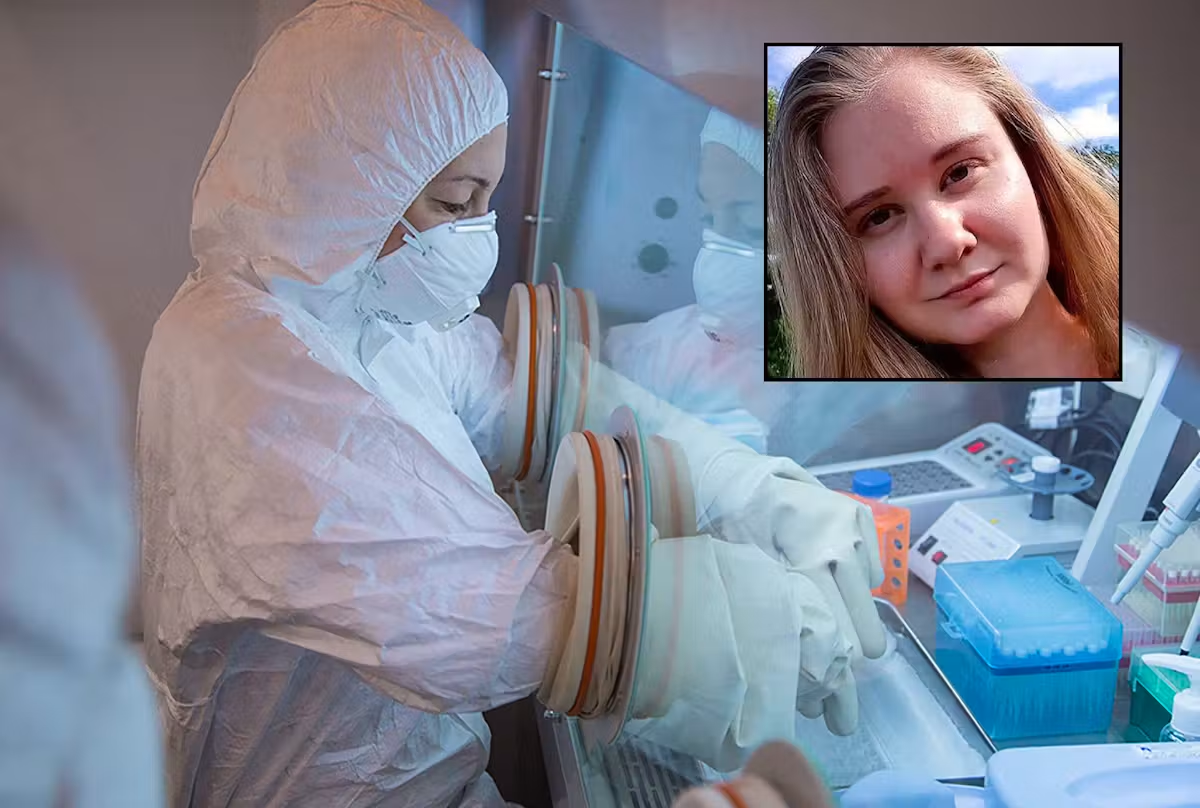
Russian authorities affirmed on Wednesday that there was “no epidemic risk” in Siberia after the death of a laboratory worker at a plague institute, denouncing “false information” on this affair while calls for more transparency are increasing.
The US, WHO and EU have urged Russia to provide more information following the death of the 28-year-old woman, which has taken on international significance in recent days. Mongolia ordered “surveillance” on its border on Wednesday.
The death of this laboratory technician, who worked for the Institute for Combating Plague in Irkutsk, Siberia, was reported by several Russian media on Friday. According to local media People of Baikal, she could have contracted pneumonic plague after a test tube broke.
“Medical surveillance of more than 90% of people who were in contact with the patient has been completed. No health problems linked to an infectious pathology have been detected,” the Russian public health agency Rospotrebnadzor said on Wednesday.
“There is no epidemic risk for the population of Irkutsk and the Irkutsk region,” she said.
According to Rospotrebnadzor, the laboratory worker “had been vaccinated and had immunity against the dangerous infections with which she worked” and two commissions of biosafety experts concluded that “no emergency situations related to the handling of pathogenic microorganisms were noted.”
Plague is an infectious disease caused by bacteria. Pneumonic plague is highly contagious and can be fatal if not treated promptly, according to the World Health Organization (WHO).
“Pneumonia”
A health commission had previously affirmed that the post-mortem analyzes carried out on the laboratory assistant made it possible to conclude that she had died of “pneumonia” of “undetermined” origin and that “no micro-organism linked to the professional activity of the young woman was detected in her biomaterials”.
Kremlin spokesperson Dmitri Peskov said on Wednesday that the “vast majority” of information reported by the media on the death of this woman was “false”.
He also said he did not have information on a request from the United States to Moscow for clarification, specifying that Moscow had already informed the WHO on this subject.
American President Donald Trump indicated that a telephone conversation with Vladimir Putin was already “planned” to discuss this situation, adding that it would take place “very soon”.
Asked about this, Mr. Peskov said that such a meeting “has not been the subject of concrete discussions at the moment”.
European Commission spokesperson Eva Hrncirova, for her part, demanded “rapid and transparent” information from Russia.
And Tedros Adhanom Ghebreyesus, the director of the WHO, called for shedding light “on reports in the media reporting a second employee suffering from pneumonia of undetermined origin”.
On Tuesday, his organization estimated that the risk was “low” for Russia and “very low” for Europe, after the “initial risk assessment” carried out by him.
According to Rospotrebnadzor, 16,000 cases of viral respiratory infections are recorded every week in the Irkutsk region and no upward trend in the number of cases has been observed over the past two weeks.
