
Some of them actually wanted to boycott them to protest against the war in Gaza.
“We organized a vote within the team to determine their feelings about playing the matches” against Israel, Sunday in Debrecen (Hungary) then on October 4 in Backa Topola (Serbia), announced the president of the Federation (FAI), David Courell, during a press conference in Debrecen.
A “significant majority” have expressed their intention to play these matches, he added, while the debate agitating the Irish selection has lasted for days.
Present at this press conference, Ireland coach Heimir Hallgrimsson clarified that a player, whose name was not given, had decided to withdraw from the team for these matches.
“No one is comfortable with playing these matches, for many reasons,” he said. “We’re trying to handle this the best way we can.”
According to David Courell, Irish players will have no interaction with the press on Sunday, nor during the next matches, against Austria in Dublin on October 1 or again against Israel three days later.
No handshakes
On Sunday, they will wear a black armband “for all the lives lost in this Israeli-Palestinian conflict”, and there will be no handshakes or exchange of pennants before kick-off, he continued.
Proceeds from the match against Austria will also go to charitable organizations.
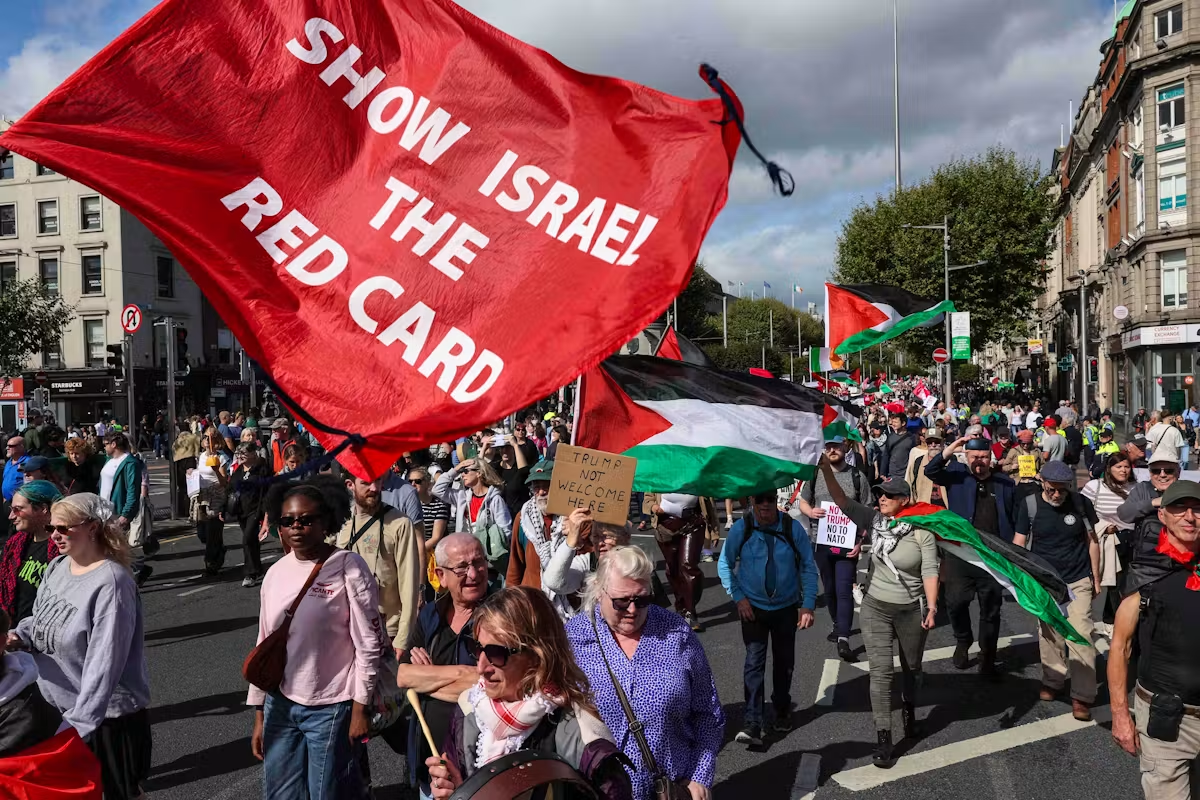
Ireland has a long history of strong support for the Palestinian cause, partly linked to its own history and British rule.
The question of Sunday’s football match comes days after public television RTE announced that Dublin would boycott the Eurovision song contest again in 2027, due to Israel’s participation.
And if RTE cannot reproduce such a scenario in football, since it is contractually obliged to broadcast the matches, it announced that Sunday’s match in Debrecen would be broadcast without comment. The FAI has also waived its quota of tickets for its supporters.
This Nations League B match takes place in Hungary because Israel, host of the match, cannot host international matches on its soil due to the security situation. And the return match, during which Ireland will officially be “at home”, will be played behind closed doors in Serbia on October 4.
Dublin officially recognized a Palestinian state in 2024, with Spain and Norway, and has repeatedly condemned the war in Gaza.
More than 160 Irish athletes have urged the national football team to boycott matches against Israel, while protests have targeted the FAI and players.
On Thursday, midfielder Jason Knight was the first Ireland international to say that Sunday’s match “shouldn’t go ahead”. “We are going to talk in more depth about this,” he told the press after the defeat the day before against Kosovo (1-0).
