
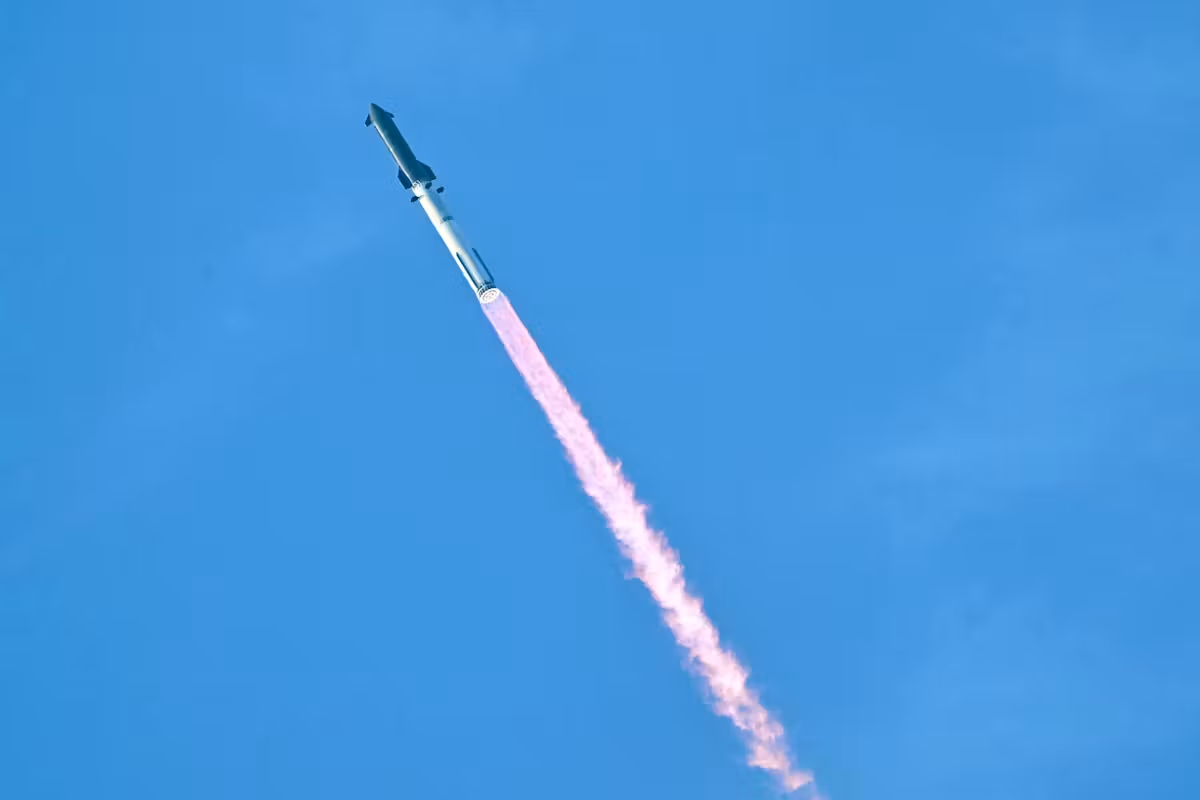
Elon Musk’s Starship megarocket reached Earth orbit on Monday during a test flight, a key success for the development of this gigantic launcher designed to send data centers into space and lead trips to the Moon and Mars.
About twenty-five minutes after its early morning liftoff from Texas, the largest and most powerful rocket ever designed began orbiting Earth and deploying operational satellites for the first time.
Accompanied by loud applause from engineers, these steps constitute real progress for the American company SpaceX, which made a resounding IPO in June. After approximately ten years of development and three years of test flights of the rocket in its complete configuration, this 14th test flight constituted the first attempt to reach orbit.
Until then, the company had voluntarily followed suborbital trajectories, which were safer and less difficult, in order to evaluate the rocket and make modifications over successes and failures.
“We will only go into orbit if everything seems to be in order on all fronts,” Jake Berkowitz, a SpaceX engineer, had warned just before takeoff. The teams’ decision to push the test to orbital flight also turned out to be more complex than expected, one of the engines of the upper stage of the rocket, the ship, having stopped prematurely during the ascent.
After mentioning a possible cessation of the test during the video broadcast, Dan Huot, manager of the company, ended up indicating after a few suspended minutes that it would continue.
28,000 km/h
The decision to provide the additional thrust to reach orbit was complex because a loss of control of the immense spacecraft in orbit would raise fears of damage to the satellites located there, or an uncontrolled re-entry into the atmosphere.
Previous Starship tests, all conducted on suborbital trajectories, had resulted in spectacular explosions, particularly over the Caribbean. And reaching orbit is very difficult because this step requires special strength and resistance.
In the case of this flight, SpaceX aimed for a circular orbit approximately 275 km above the earth’s surface, which required Starship to reach a speed of approximately 28,000 km/h.
Scheduled to last around ten hours, the test also saw the rocket’s upper stage deploy 26 next-generation Starlink satellites, intended to enrich the company’s already gigantic satellite internet constellation.
If all goes as planned, Starship will then finish its course in the Pacific, after having circled the Earth six times.
Public pressure
This test flight marks Starship’s entry into a new test phase, which should include attempts to refuel in orbit.
So many technical challenges that remain to be met before the megarocket, which Elon Musk wants to make completely reusable, can carry out commercial flights, deploy data centers in orbit or even reach the Moon or the red planet.
From an engineering point of view, just a smooth takeoff on Monday would have been “a success,” said Kathleen Curlee, a space analyst at Georgetown University ahead of the launch. But for the public and new SpaceX investors, the expectations are completely different.
“They must now carry out spectacular tests”, because the opposite would be “perceived as a failure by the general public”, pointed out the researcher to AFP.
Especially since the development of Starship, a modified version of which is to be used in NASA’s lunar program, has accumulated delays and a Chinese company has recently made progress in the field of reusable rockets.
The fact remains that SpaceX, which has made risk-taking its mantra, continues to largely dominate the global space launch market thanks to its partly reusable Falcon rockets.
Whether successful or not, this fourteenth test flight will be followed the same week by three other SpaceX rocket launches, including one that will carry a crew of astronauts to the International Space Station (ISS).
