
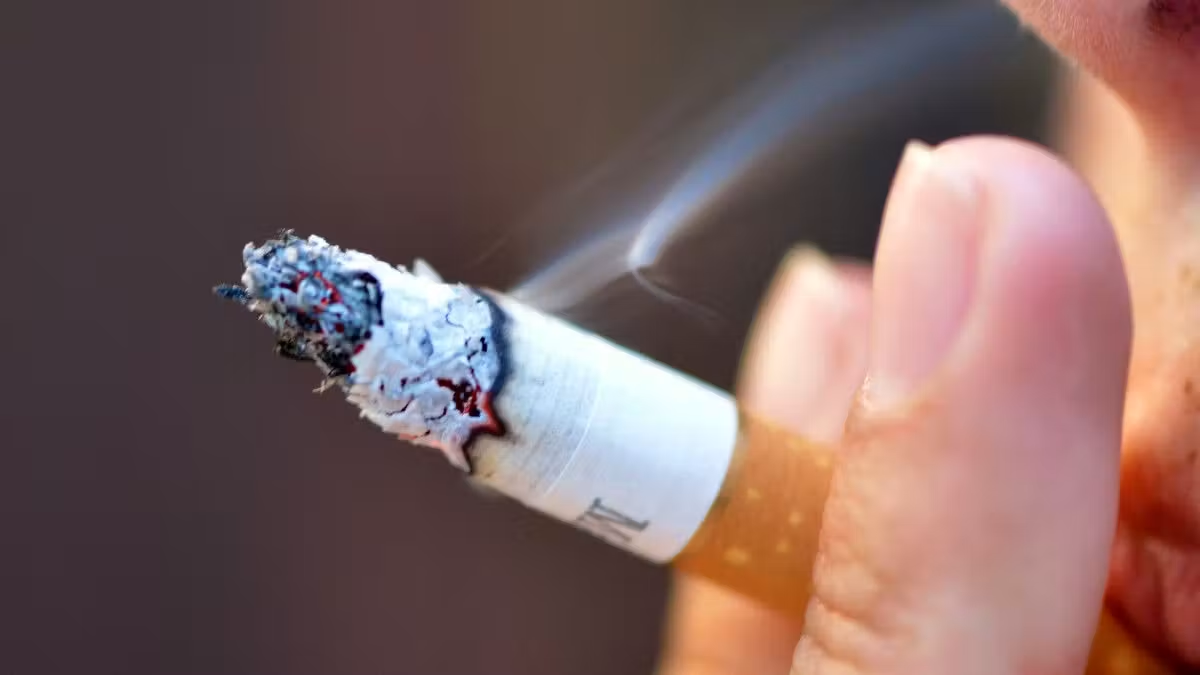
Quitting smoking after being diagnosed with lung cancer reduces the risk of death and cancer progression by up to 55% and this cessation is beneficial even at an advanced stage of the disease and for heavy smokers, a study shows.
Stopping smoking after a cancer diagnosis “can significantly improve survival” of the patient and “reduce the risk of progression of the disease”, according to a report from the International Agency for Research on Cancer (IARC) which compiles the most recent scientific data, presented Friday at the World Cancer Congress being held in Hong Kong.
“It’s never too late to quit smoking. Even after a diagnosis of advanced cancer, cessation can provide significant clinical benefits,” said Dr Mahdi Sheikh, lead author of the report, quoted in a press release from the IARC, which is part of the World Health Organization (WHO). The risk of death and progression of the disease decreases “up to 55%” compared to that of patients who remain smokers, have shown more than ten years of monitoring of patients with lung or kidney cancer who smoked at the time of diagnosis, during studies carried out by the IARC in collaboration with the NN Blokhin National Medical Research Center in Oncology in Moscow.
Beneficial for “a wide range of cancers”
Thus, patients who stopped smoking after a cancer diagnosis had “a progression-free survival time approximately two years longer” than those who remained smokers. A significant benefit was observed, including for those with advanced cancer or a heavy smoking history. And these benefits have been observed for a “wide range of cancers”, whether “strongly linked to smoking” such as lung cancer or less associated with tobacco, such as kidney cancer, according to these studies.
However, today “many patients who smoke at the time of diagnosis continue to smoke throughout their treatment course” because the preconceived idea persists that “once the diagnosis of cancer has been made, the damage would already be irreversible”, underlines the IARC. Consequently, “governments should allocate sustainable funding” for smoking cessation in cancer services, and “guarantee access to free or subsidized pharmacological smoking cessation treatments,” says the IARC.
Also, the treatment of tobacco dependence must integrate national oncology guidelines, and oncologists must be trained in smoking cessation, underlines the report. Lung cancer kills 1.9 million people worldwide, according to the WHO.
