
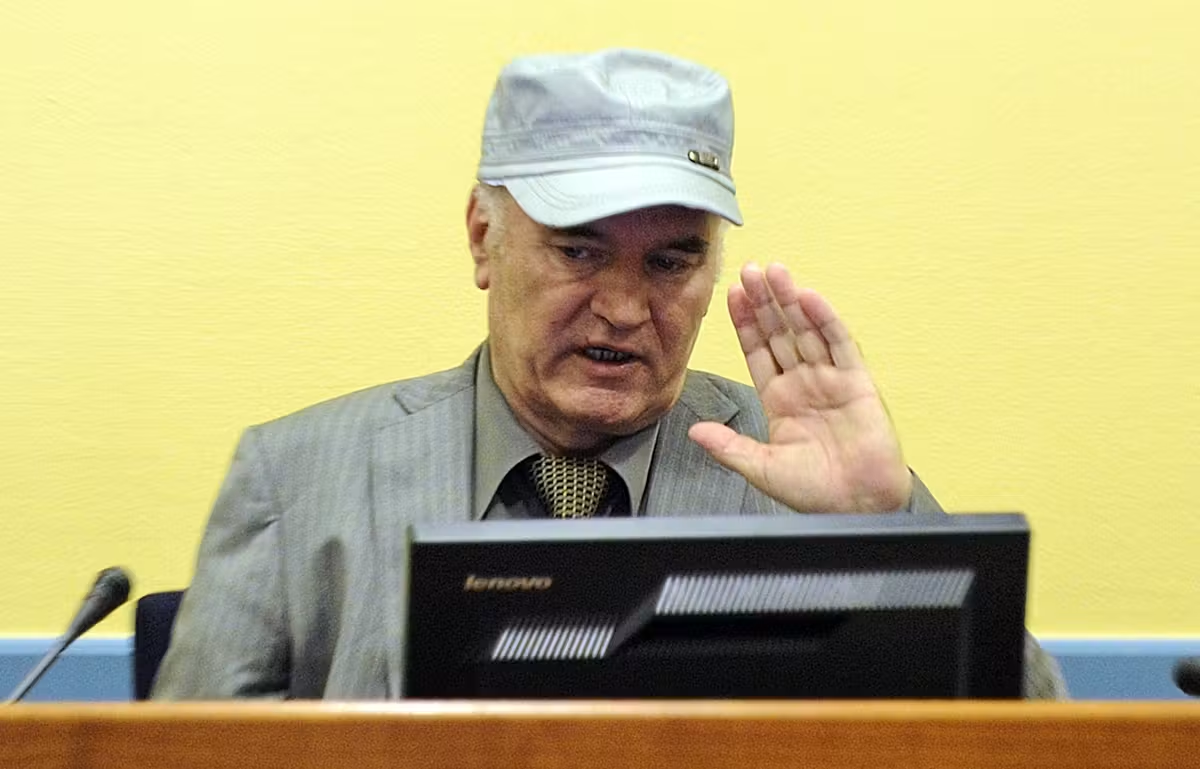
Two recent events collided: the death, in a UN prison, of war criminal Ratko Mladić and a first text, signed in Geneva by many countries, aimed at legally regulating SAA (autonomous weapons systems). What is the connection between these two events? Between the criminal and the killer machine, the central question of human responsibility for war crimes arises.
General Ratko Mladić, commander of Bosnian Serb forces during the 1992-1995 civil war, was tried and found guilty of war crimes, crimes against humanity and genocide, including ordering and supervising the murder of 8,000 civilians captured in Srebrenica. Sentenced to life, he paid for his crimes. It will not bring back the lives of his many victims, but justice has been served. Like in Nuremberg and Tokyo. As for those responsible for the genocide against the Tutsis.
This human responsibility is at the heart of the question of robots and other killer drones. In ongoing conflicts in Ukraine, Sudan and elsewhere, the technological development of autonomous weapons is progressing at breakneck speed since these weapons are equipped with AI.
There are several degrees of autonomy of these weapons systems, which make definitions and a future legal framework complex:
-
1. AI-assisted weapons: AI spots targets, humans decide. Very common and growing rapidly.
-
2. Semi-autonomous weapons: the human designates the target, the weapon pursues and strikes alone. Already operational.
-
3. Fully autonomous weapons against humans: the weapon searches for, identifies and decides alone who to kill. In development.
At the origin of the international initiative to control these autonomous weapons, the ICRC has alerted States since 2015 and is leading this fight with the UN to legally regulate the use of autonomous weapons: “This loss of control and human judgment over the use of force and weapons raises serious concerns from a humanitarian, legal and ethical point of view,” underlines the ICRC.
Let’s take an example: if a hospital, and its 200 patients, is razed by a bombing triggered by a swarm of autonomous drones, who is responsible for this war crime? The software manufacturer? The drone manufacturer? The commander of the drone unit? His boss? The head of the army? In the absence of written orders, recorded decisions or compromising videos as in Mladić’s case, no one will be guilty. This will encourage the research, development and use of ever more deadly weapons, ever more out of control. In the history of legal treaties intended to limit the use of dangerous weapons, from the Hague Conventions of 1907 (prohibiting in particular dum-dum bullets) to that of Ottawa in 1997 (against the use of anti-personnel mines), no challenge has been comparable to what awaits us with autonomous weapons, in particular those called “anti-personnel”. Just imagine being chased by a swarm of killer drones. Or by a herd of robot dogs shooting at you. If these weapons are autonomous, they will not ask any of the usual questions: civil or military? Does the person surrender or not? Is she injured and out of action?
With the aim of achieving binding rules for the use of these weapons, given the speed of their development, the ICRC brought together a new group of experts in Geneva. For the first time in ten years, on September 5, they managed to agree on a definition of these autonomous weapons systems and on the humanitarian and legal issues they pose. Nicole van Rooijen, director of the international coalition Stop Killer Robots, followed the discussions which ended at 3am. The adopted document “gives a definition of autonomous weapons, while no definition had yet been the subject of agreement between all States. It also addresses how international humanitarian law should apply to these weapons and affirms the need for meaningful human control over these kinds of weapons,” she told AFP.
128 States adopted this report which will be followed in November by an international conference aimed at signing a legally binding agreement. The US, Russia, Israel and India oppose it, while Brazil, Ireland and Norway are leading efforts for a treaty. Given the enormous ethical, legal, military and financial challenges, the fight will be tough, and 2026 should be a pivotal year. The future of war and the future of civilian populations are at stake.
Limiting the destructive effects of autonomous weapons is an absolute necessity. Leaving the responsibility for future war crimes to machines that decide for themselves who should die is, in itself, criminal.
Your opinion deserves more than a comment? Submit an article!
Your voice deserves to be heard. Expand your views here.
