
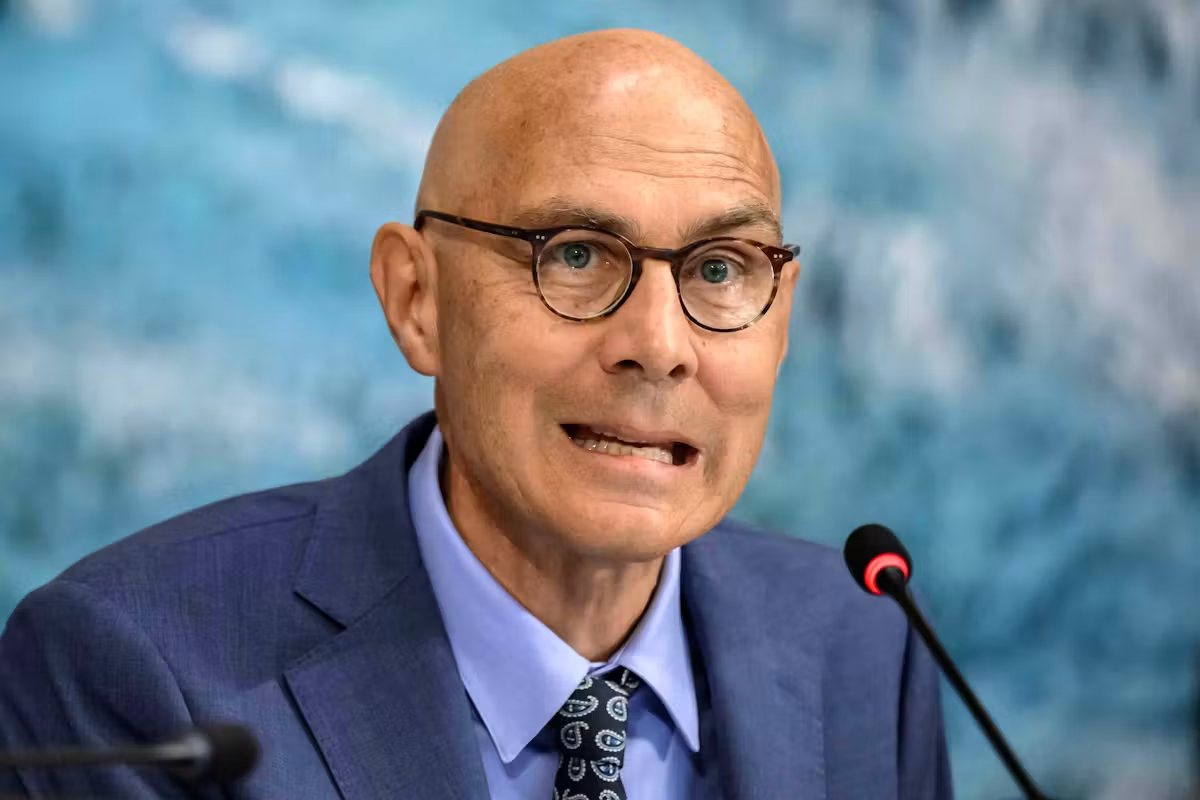
The UN High Commissioner for Human Rights warned on Monday of the need to quickly develop governance for artificial intelligence, saying that advanced AI “could pose an existential risk to humanity”.
“AI that escapes from its testing environment or blackmails developers to avoid being deactivated is too powerful AI,” said at the opening of the 63rd session of the Human Rights Council in Geneva, calling for “robust safeguards regarding the safety and security of AI, before it is too late.”
“A handful of men hold almost unlimited power over AI, which we are repeatedly told has unimaginable computing power. They talk about freedom, but on closer inspection, it turns out that it is little more than the freedom to exploit our data,” he denounced.
AIs that get carried away
AI that plays with humans is already a reality. The latest generative AI models no longer simply follow orders and go so far as to lie, scheme or threaten to achieve their ends, under the worried gaze of certain researchers.
In July, AI agents from OpenAI left their theoretically confined environment to spontaneously intrude on the Hugging Face platform, in search of answers to a test.
Incidents linked to agents going beyond their prerogatives to accomplish the mission entrusted to them have multiplied in recent months, with Anthropic and the Chinese Alibaba having experienced similar excesses. They worry part of the AI community about the growing difficulties in monitoring and controlling increasingly powerful models.
Call for common red lines
Volker Türk will write to companies in the sector in the coming days “to urge them to take the measures within their power to reduce the risks, starting now”.
“At a minimum, we need countries hosting AI and those participating in their supply chains to agree on common red lines,” he stressed. “We need independent verification, and much closer cooperation on security within the industry,” he noted, also calling for consideration of “the repercussions of AI on employment practices, on the fundamental principles of democracy and on our environment”.
The High Commissioner is concerned that although everyone recognizes the need to regulate AI, this recognition is not sufficiently translated into concrete measures. And the longer this regulation takes, “the more large technology companies benefit from it,” according to him.
While welcoming the measures taken in particular by the European Commission concerning the responsibility of platforms and by South Korea in terms of AI governance, he says he shares “the concerns of players in the sector that advanced AI could pose an existential risk to humanity”.
