
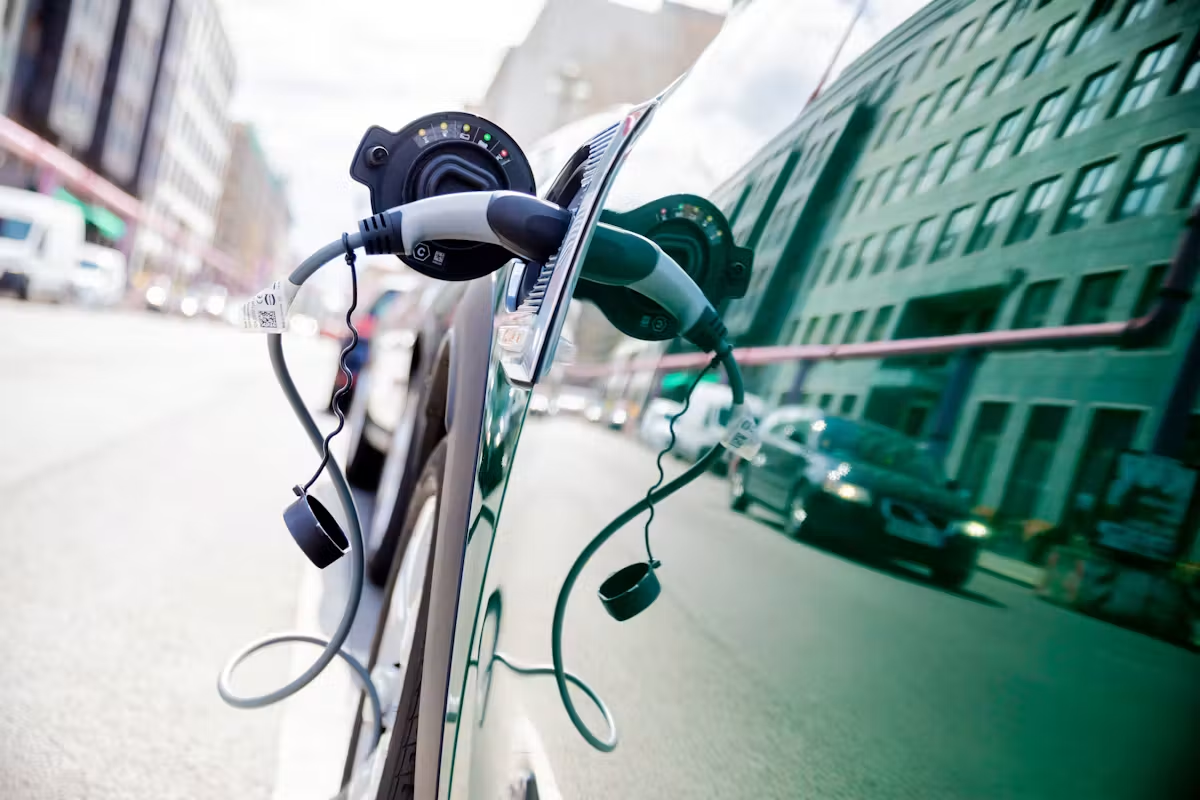
Plug-in hybrid cars emit in real conditions up to five times more CO2 than the calculations used by the European Union show, says a study published Thursday. The study carried out by the International Council on Clean Transportation (ICCT), an environmental NGO, highlights “a significant and sharply increasing gap between CO2 emissions in real conditions and those measured during approval tests” for plug-in hybrid vehicles (PHEV) registered between 2021 and 2023.
Concretely, average CO2 emissions in real conditions were 3.5 times higher than the approved values in 2021 and 4.6 times higher in 2023. The main reason for this difference is that this type of vehicle is “recharged less frequently and driven less often in electric mode than assumed” in the initial calculations, according to the ICCT. This NGO is at the origin of the revelations on dieselgate, a scandal that has affected giants of the sector since 2015, accused of having concealed the real level of nitrogen oxide (NOx) pollution.
Furthermore, explains Peter Mock, director of ICCT Europe, “it may seem counterintuitive, but the extension of the electric range of the new models has not translated into an increased use of electric mode in practice”.
The revision of the calculation method next year should, however, “probably reduce the appeal of plug-in hybrids as a tool allowing manufacturers to achieve European CO2 emissions targets for new cars,” warns Peter Mock. “It should also lead to a further decline in their market share.”
Europe facing the debate on hybrids
According to the ICCT, plug-in hybrids represented around 10% of new car registrations in Europe between January and July 2026, compared to 9% over the same period last year, while 100% electric vehicles reached a market share of 22% over the January-July 2026 period.
The publication of this study comes at a time when plug-in hybrids are among the technologies that certain manufacturers, particularly Germans, wish to see continue to be taken into account in the European strategy for decarbonization of the automobile sector.
Pushed by Germany, the European Commission proposed in December to abandon the ban on the sale of new thermal cars in 2035, in order to offer more flexibility to the industry. Instead, manufacturers will have to reduce CO2 emissions by 90% compared to 2021 levels and offset the remaining 10% of emissions.
But the German coalition would like to go even further, according to the press, to give more space to hybrid vehicles. To avoid a “strategic error”, seven countries called in June on the European Union to maintain an “ambitious trajectory” in favor of electric vehicles.
