
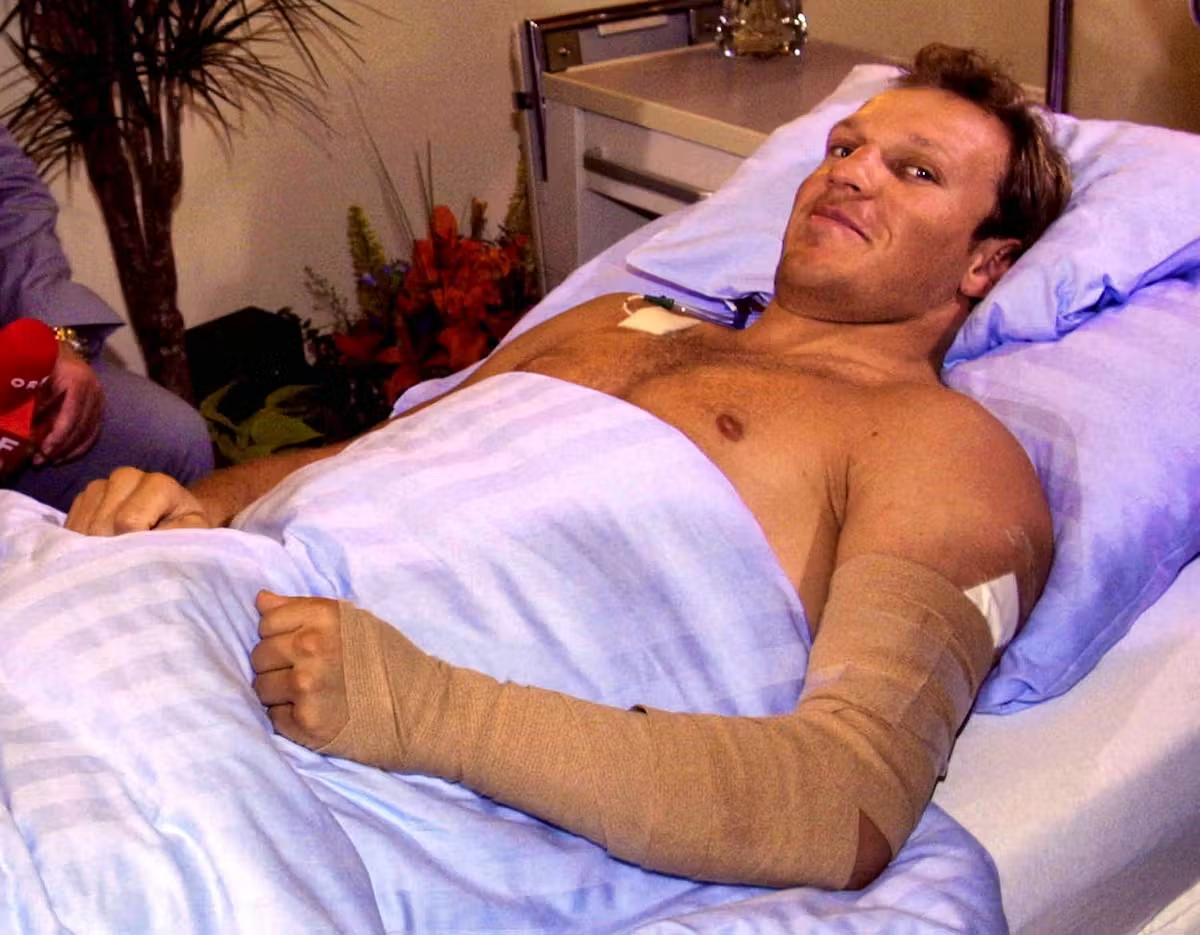
On August 24, 2001, Hermann Maier’s life changed. Until then, the Austrian ski legend seemed indestructible. While returning home on his motorcycle after summer training in Obertauern, a German motorist makes a wrong maneuver and does not see him coming.
To avoid the car, Maier swerves and ends his race in a ditch. The results were terrible: open fracture of the right tibia, serious contusions and crushing. At 28, “Herminator” found himself in critical condition. A race against time begins to save his life and his leg.
“Hermann no longer felt his legs. At the clinic, serious internal bleeding was noted. We were told: “Don’t touch him, otherwise he will bleed out,” recalls Artur Trost, his personal doctor at the time, 25 years later in the “Krone”.
He lied, he couldn’t feel his legs
The hemorrhages notably displaced a vital nerve in his leg. The situation is so critical that the doctor is considering a major intervention, which could, however, have put an end to Hermann Maier’s career. Doctors ultimately favor drug treatment.
The next day, Artur Trost asks the skier if he feels his leg better. Hermann Maier answers yes. This is a lie that his doctor will learn about later. The champion wanted at all costs to preserve his chances of one day getting back on skis.
Doctors ultimately manage to save his leg and, with it, his career. Thus begins one of the most spectacular comebacks in sporting history.
Only 521 days after his accident, on January 27, 2003, Hermann Maier won the Kitzbühel Super-G. “My greatest victory,” he would say later. “I believe that this accident was a sign from above, to show me that there were limits for me too.”
Two years later, “Herminator” won gold in giant slalom at the World Championships in Bormio. When he retired in 2009, he had 54 World Cup victories and four large crystal globes, making him one of the greatest alpine skiers in history.
