
There is a biological limit to the cloning of mammals, underline Japanese researchers in a study published Tuesday which evokes a risk of “mutational collapse”.
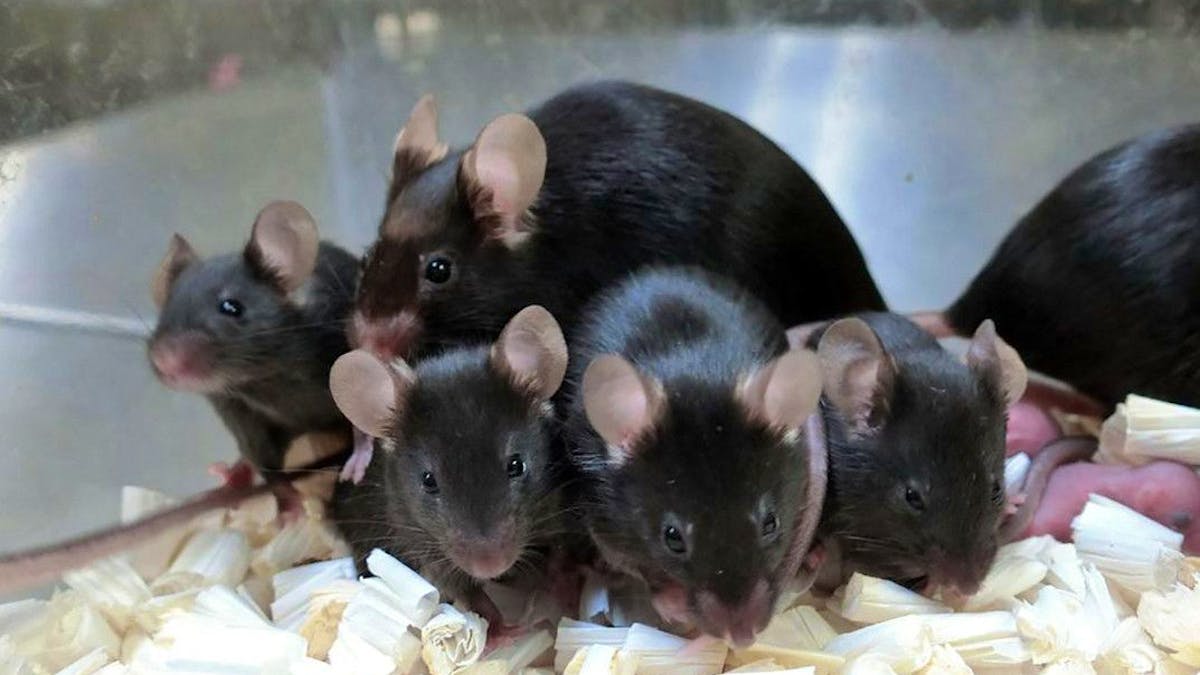
For two decades, starting from an original mouse, these Japanese researchers made a series of clones, and gave birth to 1,200 individuals.
And the 58th generation of mice did not survive, establishing for the first time that mammals cannot be cloned an infinite number of times.
This method of cloning clones had raised the hope of being able, for example, to save endangered species, or to mass produce animals for food consumption.
“We believed we could create an infinite number of clones. This is why these results are extremely disappointing,” the lead author of the study, Teruhiko Wakayama, of Yamanashi University, responded to AFP.
It was Professor Wakayama’s team that first cloned a mouse in 1997, just a year after the sheep Dolly became the first cloned mammal in history.
The process involves removing the nucleus of a cell containing DNA from a donor animal and implanting it into an unfertilized egg from which the nucleus has been removed.
“Critical turning point”
For the study, the Japanese team of researchers began cloning a mouse in 2005. When the resulting mice reached three months of age, they were cloned again, resulting in three to four generations per year.
Over the last 20 years, they have carried out more than 30,000 attempts which gave birth to 1,200 mice.
During the first years, the success rate of cloning continued to increase — even reaching more than 15% at one point — and the mice all looked identical.
This may have led scientists to believe that the process could continue indefinitely.
But a “critical turning point” appeared around the 25th generation, according to the study published by “Nature Communications”.
From there, unfavorable genetic mutations accumulated over generations, and each new generation of mice had fewer and fewer chances of surviving.
By the 57th generation, only 0.6% of clones survived. And by the 58th generation, all new mice died quickly after birth.
Causes of death unknown
“The cubs did not present any visible abnormalities, and the causes of death are unknown,” notes Professor Wakayama.
The researchers sequenced the genomes of some of the clones: they had three times more mutations than the mice resulting from sexual reproduction. They also had larger placentas and some of them had lost the copy of their X chromosome.
“We believed that the clones were identical to the original mouse,” explains the researcher, but this was clearly not the case. He admits that his team has “no idea” of how this problem could be solved, only mentioning the possibility of a new, improved cloning method.
This team is already working to collect cells from animals without harming them. They have already succeeded in cloning from cells recovered in urine, and are working on collecting them in excrement.
The importance of sex
Another notable point: when late cloned mice – even those from the 57th generation – mated with male mice naturally, they were able to give birth to healthy offspring with fewer mutations.
This discovery demonstrates that “sexual reproduction is essential for the long-term survival of mammalian species,” notes the study.
This also supports the so-called “Muller ratchet” hypothesis, named after this American geneticist, which “predicts that in asexual lineages, deleterious mutations inevitably accumulate, ultimately leading to mutational collapse and extinction,” describes the study.
The research therefore provides “the first empirical demonstration” that this collapse does indeed take place in mammals.
In a more light-hearted way, the study also undermines certain science fiction scenarios. It would have been impossible to create so many cloned soldiers in “Attack of the Clones”, the prequel to “Star Wars”, laughs Wakayama
