
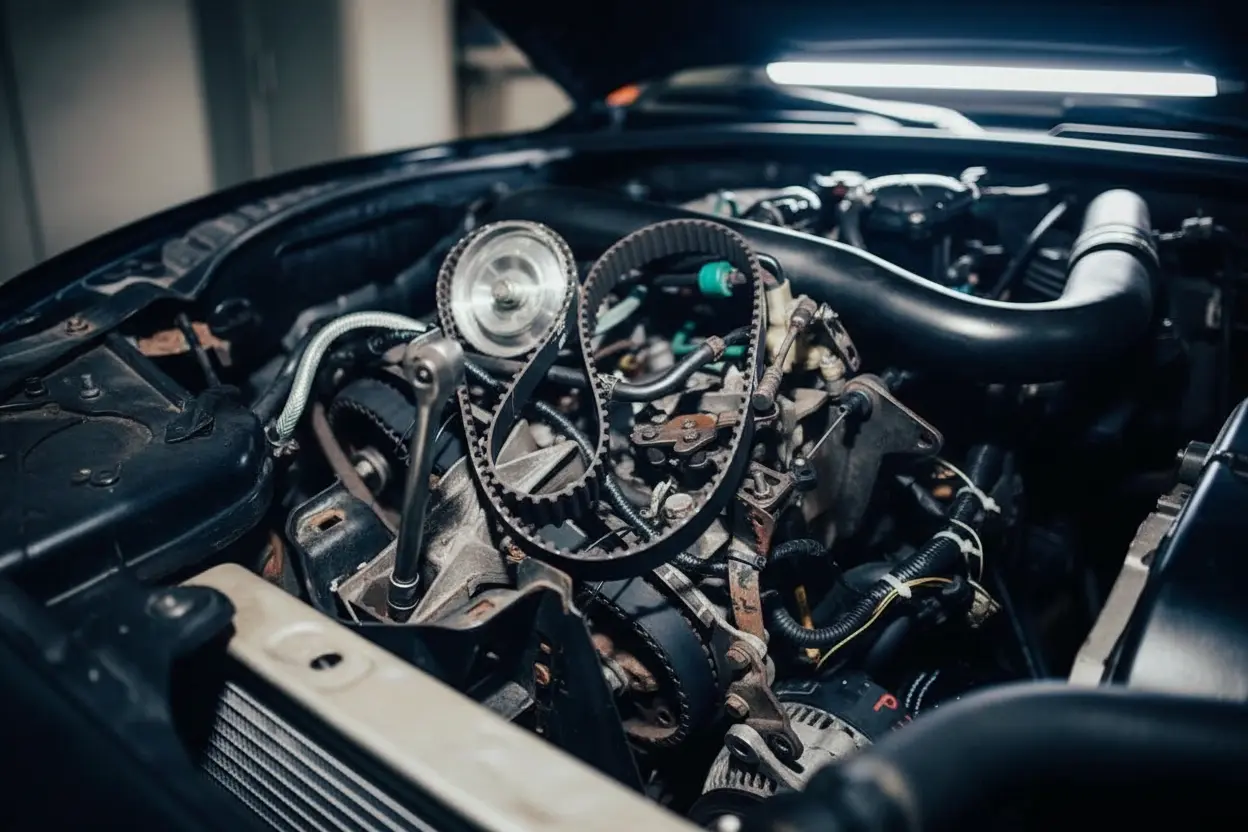
Why the Timing Belt Matters More Than You Think
The timing belt is one of the most crucial elements in your car’s engine. Still, too often, car owners overlook its importance. Without it, the engine would simply be a noisy jumble of moving parts—and not the harmonious machine you need to get you to work, the grocery store, or your next road trip. The timing belt keeps the valves and pistons moving in perfect sync. If this belt fails, the consequences can be devastating: not just a simple breakdown, but potentially costing you thousands in repairs—or, in the worst case, forcing you to replace the entire engine.
How Long Does a Timing Belt Last—Really?
Many drivers ask themselves:
“How long can I expect my timing belt to last before I need to replace it?”
As a general rule of thumb, manufacturers recommend changing your timing belt between 50,000 and 100,000 miles (about 80,000 to 160,000 kilometers). That range depends on key factors:
- The type of engine—Diesel engines usually put more strain on the timing belt than gasoline engines, so replacement might be necessary sooner.
- The brand and model of your car—Always check your manufacturer’s recommendations. Some newer vehicles are designed to go longer without timing belt issues, but this isn’t universal.
- The way you use your car—Frequent city driving, with start-stop traffic, or consistently taking long road trips, can cause the belt to wear out faster than you might expect.
Even if your car was engineered for durability, regular maintenance remains essential. Changing the engine oil and scheduling routine inspections can extend the life of your timing belt, but don’t be fooled: no maintenance will replace the need for preventative timing belt replacement when the time comes.
What Happens If the Timing Belt Breaks?
Let’s not sugarcoat it—if your timing belt snaps before you replace it, your engine is at serious risk. The motor might suddenly cut out, potentially leading to further damage like bent valves or harm to other internal parts. In these cases, the price of repair shoots up quickly. Sometimes, the repair bill is so high that a complete engine replacement might be more economical (if you can call that ‘economical’).
So, how can you avoid this automotive nightmare? The golden rule is to follow your carmaker’s recommended maintenance schedule. Additionally, have a professional—ideally a trusted mechanic—perform regular inspections. Experts can spot tiny signs of wear invisible to the untrained eye and let you know when your timing belt is ready for a change, sparing you from unpleasant surprises.
Smart Maintenance and Peace of Mind
As already mentioned, the recommended replacement interval for a timing belt is typically between 50,000 and 100,000 miles. But don’t forget: how and where you drive can factor in. Urban driving subjects your engine to more frequent stress, while marathon trips can also speed up wear and tear.
If you’ve gone past the recommended mileage for timing belt replacement or you’re wondering about your belt’s integrity, the single best move is to have it checked by a pro. Ignoring warning signs could lead to irreparable engine damage, turning a relatively minor service into a major (and majorly expensive) hassle.
In conclusion, the timing belt is fundamental for your engine’s proper operation. To avoid engine failure and costly repairs, make sure you respect replacement intervals and stay attentive to any signs of wear. If your vehicle needs a check-up or timing belt service, don’t hesitate—visit a mechanic you trust and keep your engine running smoothly for the long haul.
