
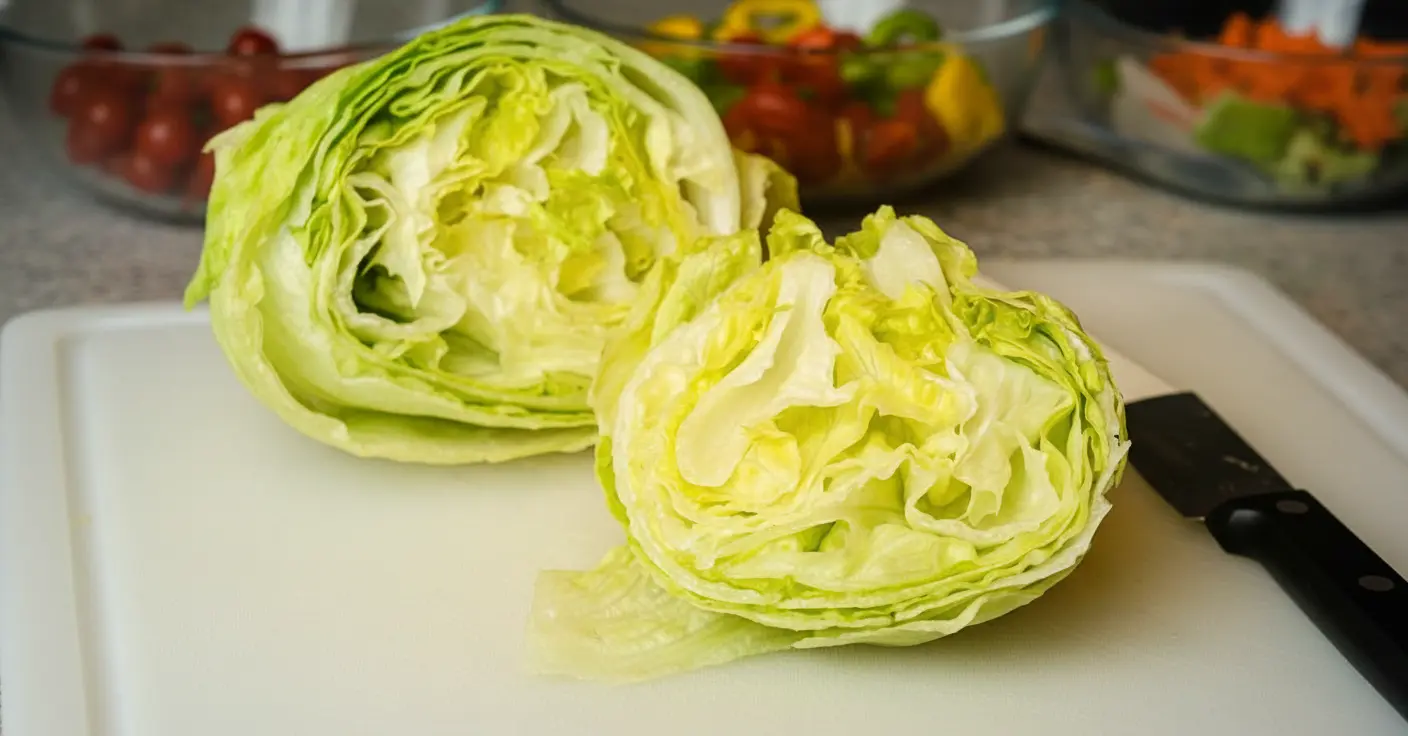
Why Iceberg and Little Gem Don’t Make the Cut
The main problem with iceberg and Little Gem (the British equivalent of sucrine) lies in their structure. These lettuces are formed of densely layered leaves, which create a tight and firm head. That dense packing isn’t just a stylistic choice – it comes with nutritional consequences. With little room for light to reach the inner leaves, these varieties develop significantly fewer essential nutrients.
Sun exposure, or rather the lack of it, is a big deal here. Nutritionists agree: “Leaves exposed to more sunlight tend to develop higher levels of antioxidants and vitamins.” When leaves are packed so closely together, less sunlight gets through, meaning fewer beneficial compounds for us. So, while iceberg has a satisfying crunch, it’s not exactly a powerhouse for your health.
Smart Choices for Salads Packed with Nutrition
When it comes to maximizing the benefits of your salads, it’s worth exploring lettuce varieties that actually deliver. Here are a couple of standouts that deserve a place in your fridge:
- Romaine lettuce is a star, brimming with vitamins A, K, and C as well as essential minerals like iron and calcium. Its elongated, loosely packed leaves absorb more sunlight, enhancing nutrient synthesis and offering a far more impressive nutritional profile.
- Oak leaf lettuce, recognizable by its frilled, delicate leaves, provides an excellent source of antioxidants and a variety of vitamins. Its slight crunch and gentle flavor make it a taste bud-friendly – and health-friendly – alternative to dense-head lettuces.
Mixing up your salad greens is hands-down the best way to maximize your nutritional intake. Just like you wouldn’t let your pension sit unchanged for decades (hopefully), it pays to give your diet a regular re-evaluation so you’re always getting the most bang for your buck – or in this case, your forkful.
Beyond Lettuce: Factors That Impact Your Salad’s Nutritional Value
Of course, choosing a different lettuce is just part of the equation. Several key factors can affect how healthy your salad really is:
- How it’s grown matters. Organic farming limits your exposure to pesticides and other harmful chemicals. Studies show that salads grown using organic methods generally contain more beneficial compounds than conventionally grown varieties. Look for organic certifications when shopping local or in supermarkets.
- Freshness is key. Nutrients start to deteriorate after harvest, so lettuces grown close to home are usually more nutritious. Supporting local agriculture or farmers’ markets means more vitamins and minerals for you and a happier local economy.
- Proper washing is a must. Washing your leaves well helps get rid of potential biological or chemical contaminants. If you’re watching your food budget but want to eat healthy, remember that certain jobs in the UK offer solid pay with little required experience, letting you spend more on quality food (and perhaps a few gourmet salad toppers).
The Benefits of Making The Nutritious Switch
Regularly including nutrient-rich salads in your meals offers a range of health perks. Branching out with lettuce varieties allows your diet to cover a wide spectrum of essential nutrients, some of which can be tricky to find in other foods.
Dark leafy greens, in particular, are heroes for cardiovascular health thanks to their natural nitrate content. These compounds help blood flow more efficiently and can lower blood pressure. Their high vitamin K content also plays a crucial role in blood clotting and bone health.
The antioxidants found in open-leaf lettuces act as your body’s cellular shield, helping fend off oxidative damage, slow the aging process, and ward off chronic disease.
And if you’re the adventurous type who enjoys discovering new places, keep an eye out for newly established signage highlighting outstanding gardens across the UK. These markers can point you towards sites where you might spot traditional varieties of vegetables – including salad greens – grown using old-school techniques.
Swapping iceberg and Little Gem for more nutritious alternatives turns your basic side salad into a true functional food. This is a nutritional step up that doesn’t need to be complicated, expensive, or reserved for elite healthy eaters. It’s an easy, tasty upgrade that’s accessible for every kind of diet – and every kind of eater.
