
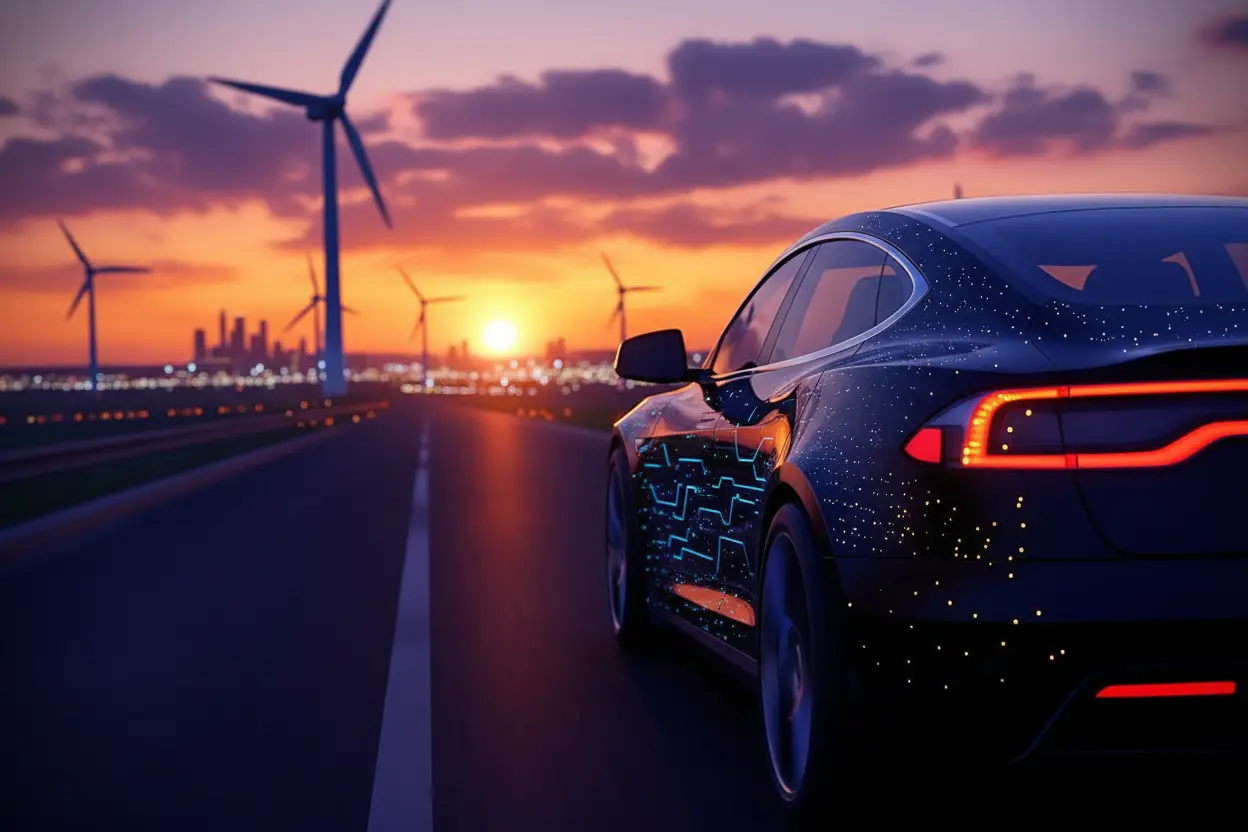
A Car That Powers Itself—Literally
Picture this: an electric vehicle that generates its own energy while you cruise down the street. That’s the audacious bet of Indian professor Satyam Kumar Jha, who’s working on a concept as adventurous as it is promising. Instead of relying on traditional charging infrastructure, his system harnesses the air around the car to drive a turbine, producing electricity on the go—but without ever stopping for a top-up.
The Science Under the Hood
At the heart of this project is a captivating innovation: an air intake at the front of the car captures the aerodynamic flow as soon as the car is moving. The incoming wind turns a turbine installed within the motor, converting the kinetic energy of the air into electricity. According to the first demonstrations, the system can work at speeds as low as 19 mph (that’s 30 km/h for our metric friends). And here’s a neat twist—unlike some solutions that mount a clunky wind turbine on the roof, this design does its job seamlessly, with no need for a visible rooftop propeller.
Not Everything Is a Breeze
Yet, as dazzling as this vision is, significant hurdles remain. The first challenge lies in aerodynamics. The air intake system could increase drag—that resistance you feel when you stick your hand out of a speeding car window—which means the car might use more energy to move, nibbling away at the gains from the turbine. Beyond that, Professor Jha’s project hasn’t yet undergone full scientific validation—a critical step before any claims about scalability can be made with a straight face.
Another big question lingers: could this technology be integrated into existing car models, or would it require a complete vehicle redesign? The potential is huge, but so are the engineering headaches that come with it. On the bright side, if the answers work out, we could be witnessing a historical leap forward for green mobility.
The Road Ahead: Revolutionary, but Still Under Construction
The journey to a world without charging stations is still a long one, with plenty of speed bumps along the way. But even at this stage, the project sparks fascinating debates. If this self-charging solution manages to convince the experts, it could reshape the standards for EVs and steer the future of how we get around. Who knows—one day, this quiet revolution might just power your daily commute, and make those pit stops for charging a story you tell the grandkids.
