
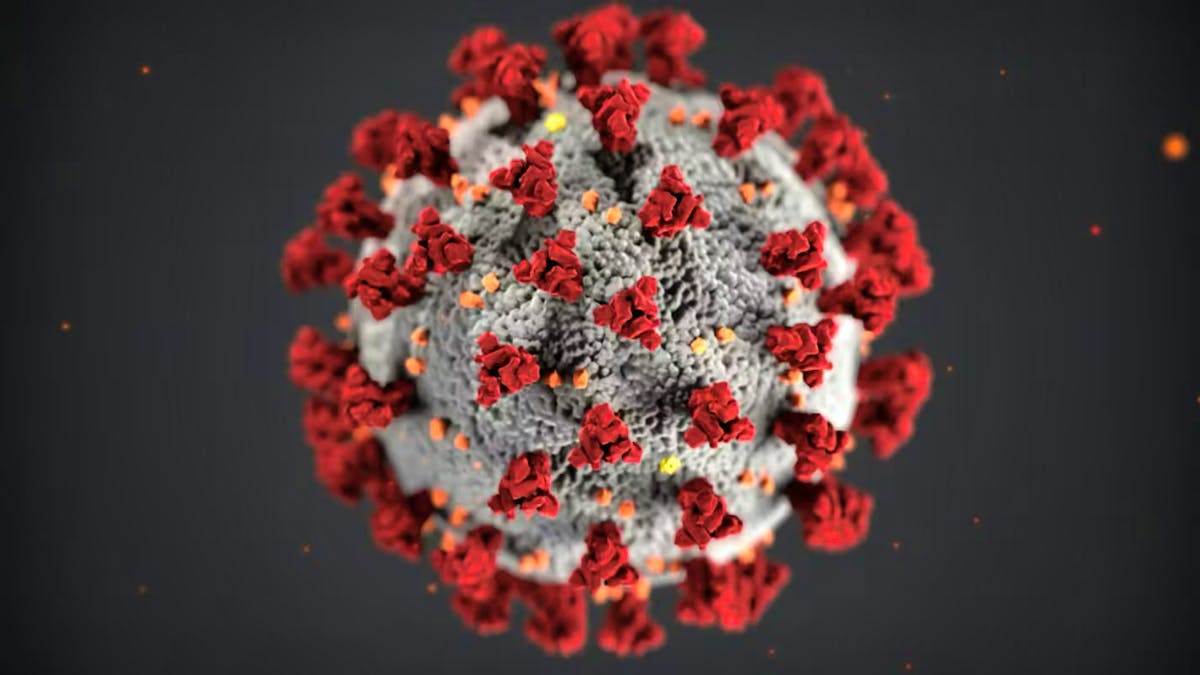
The pandemic is over, but the SARS-CoV-2 coronavirus continues to circulate, in the form of new variants. Currently, all eyes are on BA.3.2. His nickname: Cicada. This is no coincidence (see box). Like its predecessors – Stratus (Frankenstein) and Nimbus, for example – the BA.3.2 is also a variant of Omicron.
Many mutations
Specialists are currently observing the development very closely. The main reason is the unusually high number of mutations of the variant. Indeed, BA.3.2 has 70 to 75 modifications of the Spike protein – the part of the virus that allows it to enter human cells. This could allow Cicada to partially bypass existing immunity, whether that acquired after contact with the virus or that conferred by vaccines.
More contamination?
“The number of mutations makes it less likely that current vaccines will be very effective against this variant,” explains American infectious disease specialist Robert H. Hopkins to “USA Today”. University of Virginia epidemiologist Kyle B. Enfield agrees. “Mutations make it more difficult for the immune system to recognize the virus,” he writes on theconversation.com.
In December, the World Health Organization (WHO) said it expected “currently authorized Covid-19 vaccines will continue to provide protection against severe forms of the disease.” In the same press release, it classified BA.3.2 as a “SARS-CoV-2 variant under surveillance”.
How does BA.3.2 manifest?
Despite its numerous mutations, Cicada causes symptoms similar to those of previous variants: fever, cough, fatigue, runny nose, headaches and body aches, but also diarrhea. As with the Nimbus variant, cases of sore throat have been reported with BA.3.2, but there is no reliable data on this yet.
The WHO said there was no data “indicating increased severity, increased hospitalizations or deaths related to this variant.” This is also the opinion of specialists such as epidemiologist Enfield or infectious disease specialist William Schaffner from Vanderbilt University Medical Center in Nashville (American state of Tennessee).
Is Cicada also present in Switzerland?
Yes. After being detected for the first time in South Africa in 2024, the variant reached 23 countries in February, according to the American health authority CDC. Cicada has already established itself strongly, especially in Northern Europe. Thus, in countries like Denmark or the Netherlands, around a third of the coronavirus cases analyzed were attributed to BA.3.2, as shown by data from local health authorities (for example here).
In Switzerland, Cicada first appeared in the fall of 2025 and has since caused infections. Analysis of wastewater shows that the share of this variant is currently decreasing. It circulates in parallel with old knowledge among SARS-CoV-2 variants, such as XFG (Frankenstein), XEC, NB.1.8.1 (Nimbus) and KP.3.
How can I protect myself?
With the protective measures that are already known: stay away from sick people and wear a mask. Those who want additional protection can get vaccinated. According to current data, adapted vaccines reliably protect against severe forms. In Switzerland, these are: Spikevax LP8.1 from Moderna and Comirnaty LP.8.1 from Pfizer/BioNTech.
Why the BA.3.2 is called Cicada
Although most people are hearing about Cicada for the first time, it is not really new. It has already been circulating since 2024, but has gone largely unnoticed. In this, BA.3.2 recalls cicadas, which rarely appear. These insects spend most of their lives, often 13 to 17 years, as nymphs hidden underground. Only to mate do they come out en masse into daylight. In the United States it is sometimes referred to as “Swarmaggadon”, meaning “swarm disaster”.
