
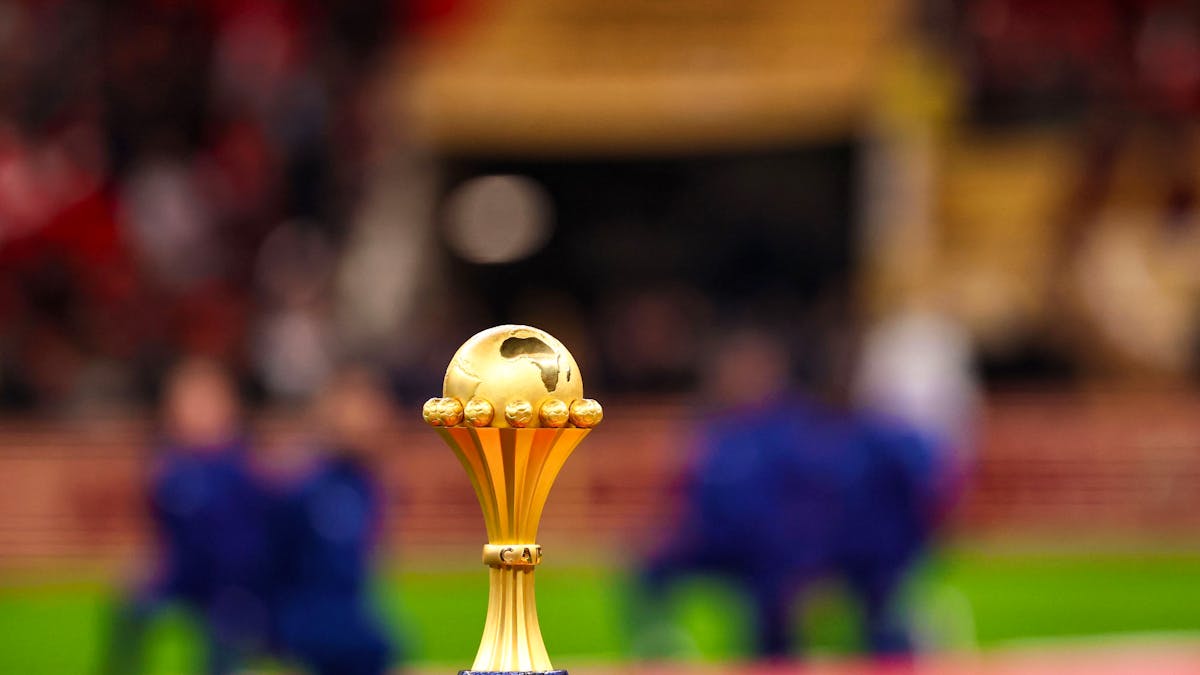
Defeated on the field by Senegal 1-0 after extra time at the end of an incredible final on January 18 in Rabat, Morocco regained the title of African champion ten days ago thanks to a decision by the appeal jury of the African Confederation (CAF), which gave it victory on the green carpet (3-0).
But the Senegalese Lions, who are accused of having left the field for a while as a sign of protest during this final, remain with all their claws out: they have brought the matter before the Court of Arbitration for Sport (CAS), which will make its decision at a later date.
In this remote duel, Morocco faced Ecuador in Madrid on Friday evening (final score 1-1). And the Moroccans took the opportunity to send a simple message: two and a half months before the World Cup in North America, they have moved on.
“We look ahead”
Questioned by the press, Yassine Bounou, the emblematic goalkeeper of the Atlas Lions, summed up this thought. “We are focused on the future, not on this,” said the goalkeeper from Al-Hilal (Saudi Arabia), who spent many years in Spain (at Atlético Madrid, Zaragoza and Sevilla FC).
Was the CAF decision justified? “Our response would be the one given by our federation, period. We look ahead,” he retorted.
On March 18, the day after the CAF thunderclap, the Royal Moroccan Federation welcomed “respect for the rules”. “The CAF recognizes today that the rule, known to all and applicable to all, had not been respected,” she argued.
Morocco’s new coach, Mohamed Ouahbi, successor to Walid Regragui, then described the measure as “deserved”. “But it’s important to focus on the present and the future. My goal is to make the team efficient for the World Cup,” he continued.
A course of action validated by the thousands of Moroccan supporters who came to attend their selection’s match in Madrid, many draped in the national flag.
“One more star”
“If someone says there are regulations, they must be respected,” argues Yassine El Aouak, 35, who came specially from Italy. “I think at the end of the day we will bring the trophy home. We know we deserve it,” he adds, while the cup and medals awarded on the evening of January 18 remain in the possession of the Senegalese to this day.
“The rules are the rules,” says Taha El Hadiguy, 22 years old. He recognizes that “winning two months later” is “very different” than “winning the same evening”. “But a victory is a victory. We now have one more star on our jersey,” adds this fan of the Atlas Lions, whose only continental title dates back to 1976.
At a press conference, the Moroccan media got in tune by focusing on Ouahbi’s tactical choices and on the upcoming World Cup, where Morocco will face Brazil, Haiti and Scotland in the group stage.
Ecuador coach Sebastian Beccacece said he was satisfied with having obtained a draw against the “African champions”.
Against the South American selection, Morocco lacked efficiency, but Mohamed Ouahbi preferred to emphasize the strong points of his team. “When we are a very high level team, ranked eighth in the world and a World Cup semi-finalist, we have no weaknesses,” he argued.
With a weighty statistical argument: Morocco is now undefeated for 25 matches. CAN final included.
Senegal presents the cup at the Stade de France
For its part, Senegal, although stripped of its title of African champion on the green carpet to the benefit of Morocco, still presented the CAN trophy, which it still claims, before the friendly match against Peru, Saturday at the Stade de France.
Kalidou Coulibaly, the CAN trophy in his arms, followed by all his partners in tracksuits, entered the pitch during a mini-concert by Youssou Ndour, the Senegalese superstar, before starting a tour of the field, the cup passing from hand to hand.
