
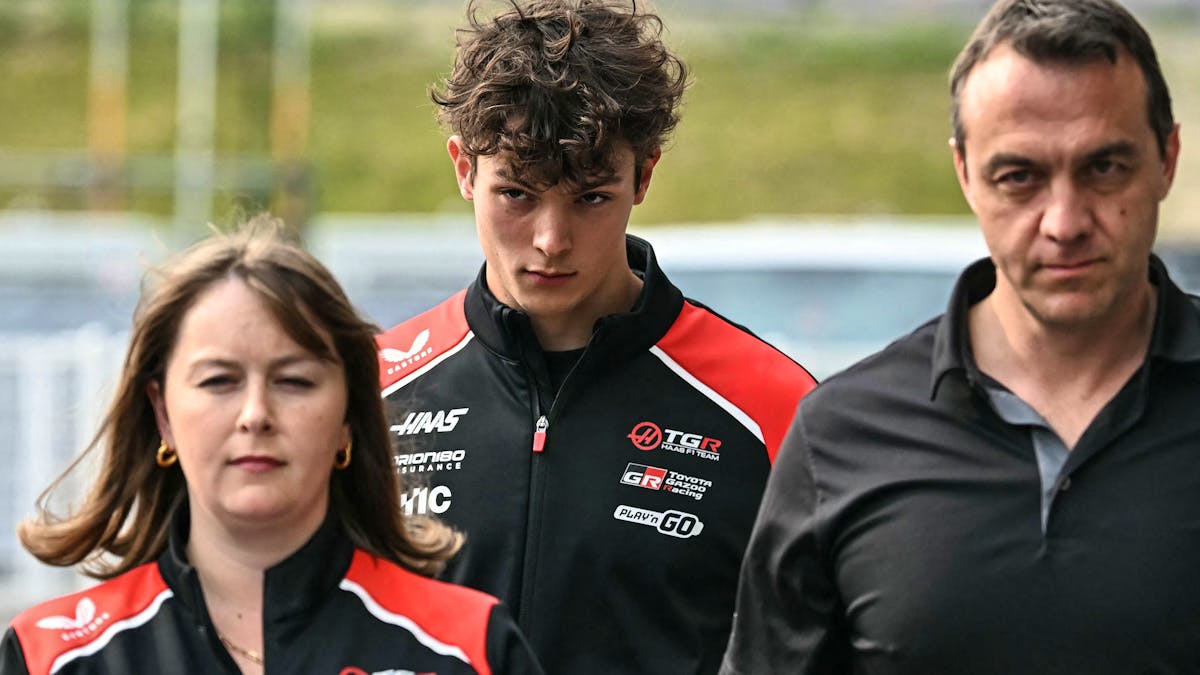
On Sunday, during the Japanese Grand Prix, young British driver Oliver Bearman was the victim of an accident which reignited the debate around the new hybrid engines which are dividing the paddock. Bearman, 20, arrived in the race at full speed, his Haas single-seater racing at more than 300 km/h on the Suzuka circuit while the Alpine of Argentinian Franco Colapinto was traveling 50 km/h slower. He avoided it but crashed his car into a security barrier. Bearman escaped with a bruised knee, his F1 was badly damaged.
Carlos Sainz Jr., a Spanish driver at Williams who represents the profession to motorsport authorities, immediately protested: “We warned that this kind of accident would happen one day or another.” “Luckily, there was an escape route, but imagine this kind of crash against a wall in Baku, Singapore, Las Vegas,” he thundered, referring to the circuits set up for a Grand Prix in the middle of a city, as also in Monaco.
Bearman assured in a press release that he was “perfectly well”, but noted that “the very big difference in speed of 50 km/h resulted in part from the new rules” on 50% electric, 50% thermal engines. “It takes some getting used to, but I felt like I didn’t have enough space on the track given the huge difference in speed,” he explained.
In question, the new regulations of the International Automobile Federation (FIA) which imposed different hybrid engines in 2026 with the objective of encouraging overtaking. But measurement divides due to the complex management of the electrical energy of the battery and the significant differences in speed that this can cause.
The cars have an “overtaking” mode and a “boost” button to have a boost of electrical power and double. But at the risk of draining their battery, losing speed and having to spend time recharging when braking.
The FIA announced Thursday “adjustments” to the management of electrical power during qualifying and warned Sunday that “any other adjustments (for the race) related to energy management require careful technical simulation and analysis” of engineering.
According to the Motorsport.com website, the FIA, F1, teams and drivers should take advantage of the month of April, when GPs in the Gulf were canceled due to the war, for meetings on hybrid engines and safety.
