
The world has just experienced its fifth hottest February, during a month marked by very intense rains over part of Europe, the European Copernicus observatory announced on Tuesday.
Temperatures reached 13.26°C on average last month across the globe, 1.49°C above the pre-industrial period (1850-1900), before the massive use of coal, oil and gas lastingly warmed the climate.
On the European continent, temperatures were on average rather cool, with the past month ranking among the three coldest Februarys in the last 14 years, but with strong contrasts.
Conditions were thus colder in Scandinavia and Finland, in the Baltic States and northwest Russia, compared to 1991-2020 normals. But conversely they were warmer in western and southern Europe.
For ocean surface temperatures, February was the second warmest, details Copernicus in its monthly climate bulletin. In the Arctic, the average sea ice extent was 5% below average, reaching the third smallest area recorded for a month of February. But here again, the contrasts were marked, since it reached its largest monthly extent in the Greenland Sea in 22 years.
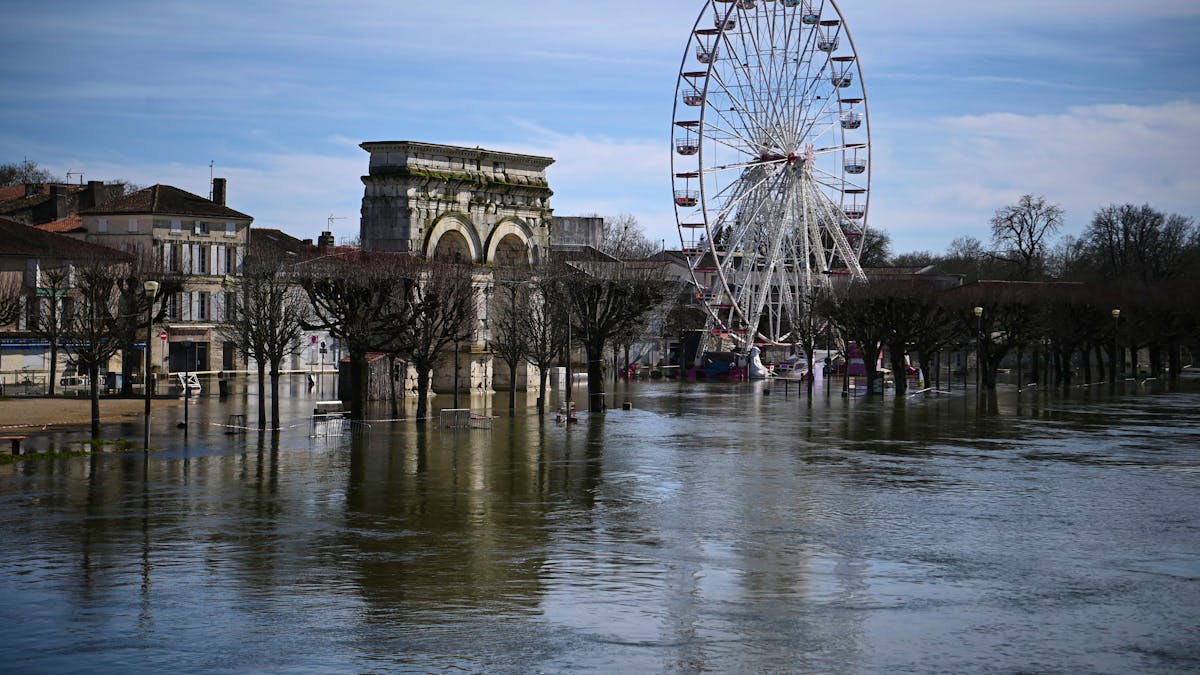
Regional differences were still significant for hydrological conditions, with most of Western and Southern Europe experiencing a wetter than average month – like France, affected by large-scale floods – while the rest of the continent was drier.
Nine storms
Nine storms in particular brought torrential rains and violent winds to Spain, Portugal and Morocco between January 16 and February 17, causing more than 50 deaths. In a study published at the end of February, the group of scientists World Weather Attribution (WWA) concluded that climate change had intensified these rains.
“The extreme events of February 2026 highlight the growing effects of climate change and the pressing need for global action” to counter it, underlined Samantha Burgess, a Copernicus manager, quoted in the bulletin.
“Europe experienced strong temperature contrasts” while “exceptional atmospheric rivers – narrow corridors of very humid air – brought record precipitation and widespread flooding to Western and Southern Europe,” she said.
